Green Building & Certification: What’s Next for Cambodia’s Built Environment
Green Building & Certification: What’s Next for Cambodia’s Built Environment

Vattanac Capital adapted from Stephen Studio via Pixabay.
Green building in Cambodia is becoming a defined requirement in how commercial buildings are planned and delivered. Energy demand, indoor environmental quality and operational performance now influence how projects are briefed, evaluated and positioned within the market. As a result, greater emphasis is being placed on early-stage design decisions that shape long-term building performance.
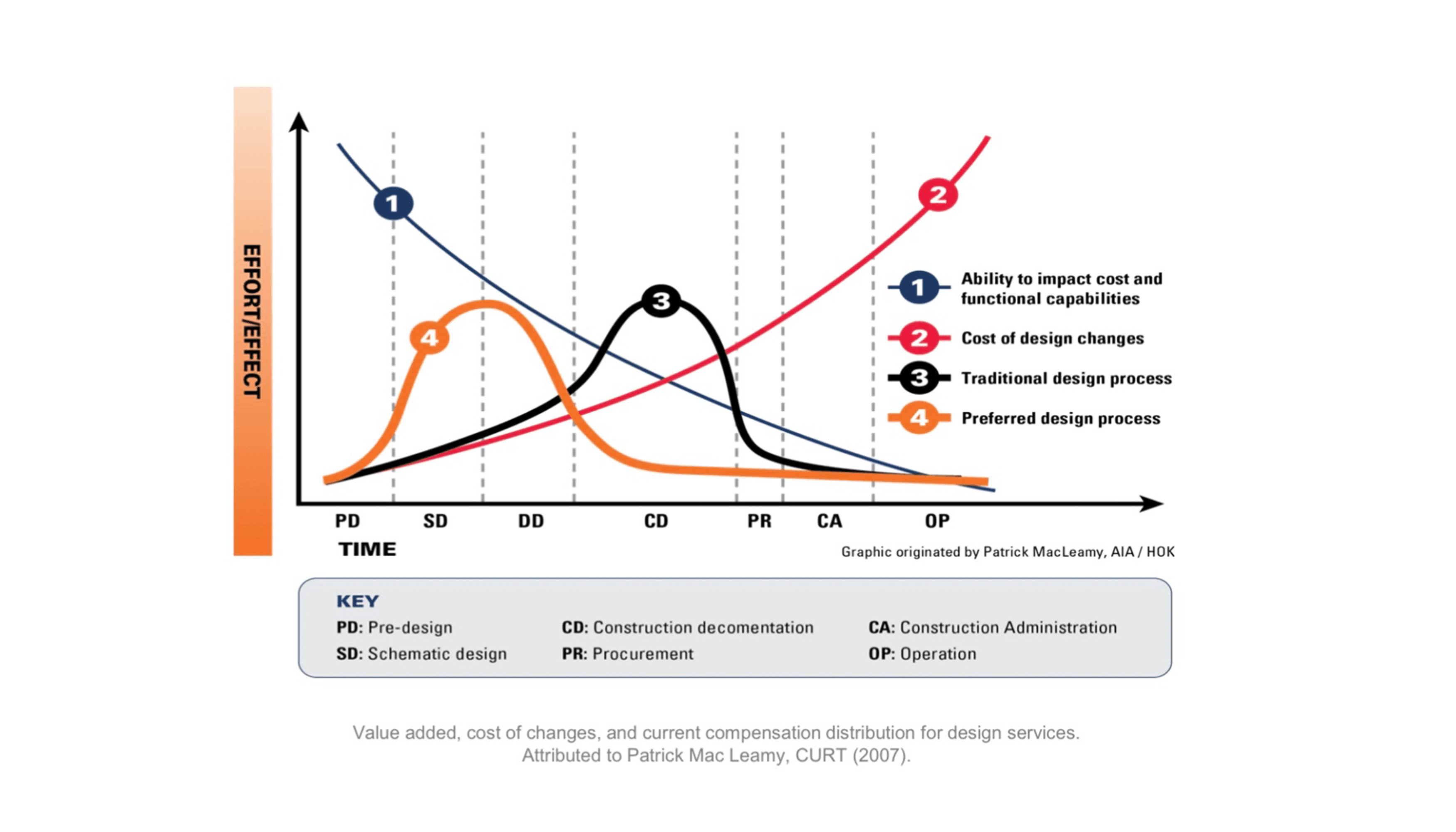
Figure 1: The MacLeamy Curve shows that the ability to impact cost and functional capability is highest during early design phases, while the cost of change rises sharply as the project progresses. (Source: Patrick MacLeamy / HOK, reproduced on ResearchGate).
Front-loading the design process allows developers to resolve complex performance requirements when the potential for impact is highest and the cost of implementation remains low. Strategic decisions made during these early phases ensure that the architecture serves as a high-performance asset rather than a liability. These early-stage façade and performance decisions resolve cost, user experience and brand positioning together. This integrated approach underpins tenant retention and establishes the building’s initial market reception.
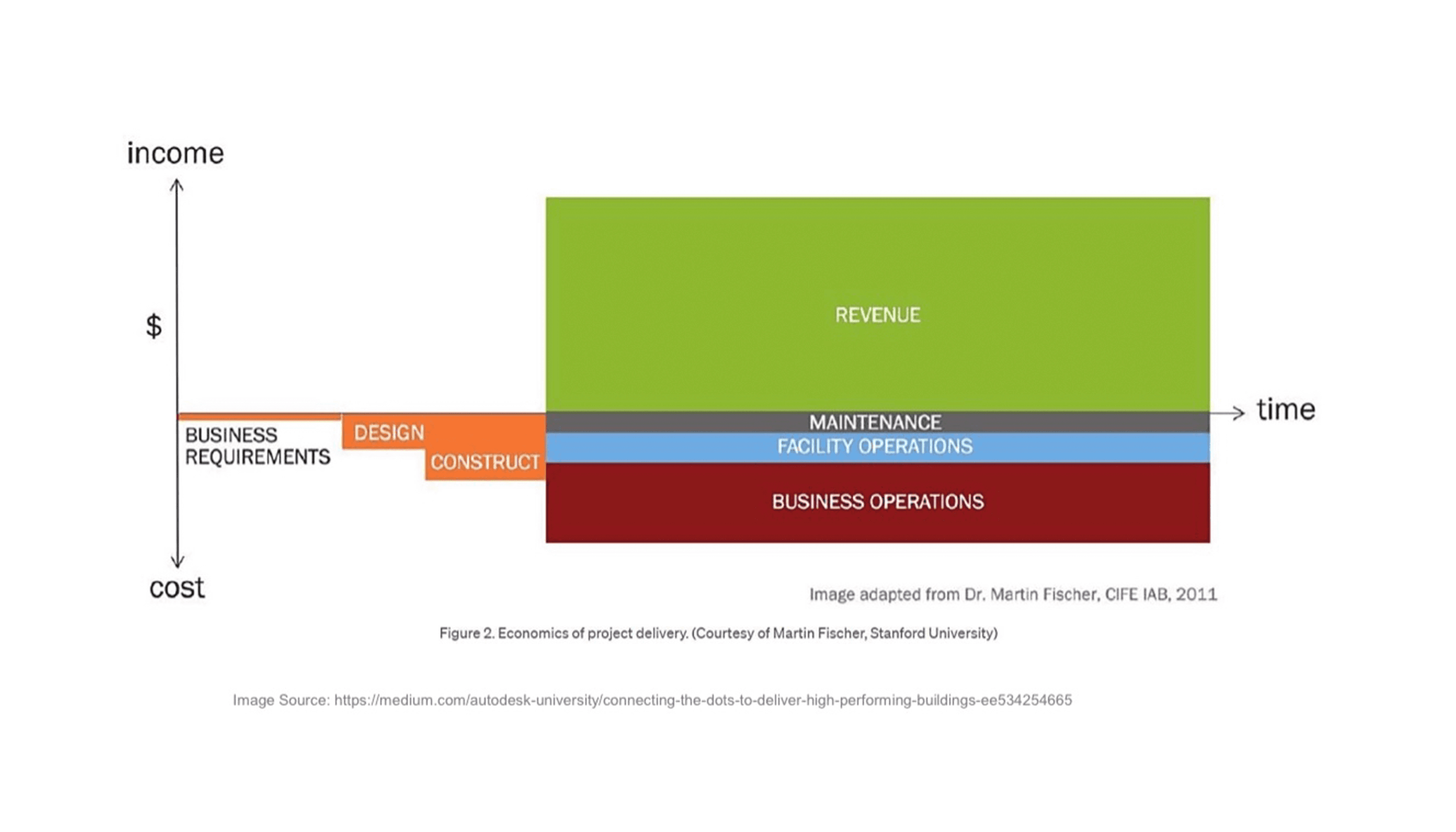
Figure 2: The economics of project delivery illustrate that initial design and construction costs are a small fraction of the long-term revenue and operational costs over a building's lifecycle. (Source: Autodesk University).
By establishing an efficient operational platform at handover, early design choices control total cost of ownership and enable higher net operating income over time. Decisions that reduce heat gain, simplify maintenance and support reliable facility operations shift value toward revenue generation rather than remediation. This lifecycle perspective ensures that early investment translates into sustained market positioning and protected yields in Cambodia’s competitive commercial landscape.
How building design reduces energy use in tropical climates
Parametric modelling for tropical climates shows that smaller glazed areas, lower‑SHGC glass and modest horizontal overhangs together produce the largest modeled indoor temperature reductions, materially cutting cooling loads (Tong et al., 2021). In Cambodia, where cooling demand is driven by solar heat gain, these façade levers are especially effective: shading depth, glazing ratios, orientation and roof construction determine internal heat loads before mechanical systems are introduced. A well‑resolved envelope lowers cooling demand and allows smaller, more efficient plant, improving capital efficiency and long‑term operational performance.
Underperforming façades force larger plant and higher operating costs. Correctly resolved architecture sets system size and lifecycle cost from the outset.
A precise approach treats the building as a series of thermal zones. Circulation spaces, service cores and transitional areas operate under less intensive conditioning than primary workspaces. This reduces unnecessary energy demand while maintaining user comfort.
What LEED certification means for commercial buildings in Cambodia
LEED provides a consistent framework for setting and verifying performance targets. Early energy modelling, daylight analysis and material choices are tracked through documentation, commissioning and measurement, narrowing the gap between design intent and operational outcomes.
Corporate occupiers apply internal standards to environmental performance, air quality and workplace conditions. Certification establishes a measurable basis for comparison alongside location, cost and delivery timelines.
These considerations shape how workplace environments are planned and experienced, particularly in office developments where performance and user wellbeing are closely linked. As explored in Workplace Design for Performance.
Passive design strategies for Cambodia’s climate and urban conditions
Building performance depends on how design responds to site conditions.
Urban density, adjacent structures and surrounding heat sources influence airflow and solar exposure. Early‑stage massing and environmental studies allow design decisions to respond to measured conditions rather than assumptions.
Façade elements including deep overhangs, vertical fins and double-glazed windows reduce heat gain while maintaining daylight. Transitional spaces such as shaded terraces, voids and semi‑open corridors act as thermal buffers between exterior and interior environments. These technical responses echo traditional Khmer strategies. Raised living floors and shaded spaces beneath the house moderate solar gain and facilitate cross‑ventilation (Keo & Vorapat, 2025). In contemporary practice, raised podiums, recessed balconies and ventilated voids translate that logic into robust façade and massing strategies that reduce solar exposure while preserving usable footprint and occupant comfort.
Passive evaporative cooling further enhances this performance by employing water features or wetted surfaces to pre‑cool incoming air. Effective implementation treats this as a system where metered controls, water treatment, drainage and BMS‑linked sensors manage humidity and hygiene risks. When integrated correctly, this can shorten HVAC runtimes and cut peak mechanical demand without degrading indoor air quality.
Taken together, these strategies form a measured performance package that improves occupant comfort and reduces operating cost risk. Early integration, commissioning and a clear maintenance regime are essential to secure lifecycle benefits, with results validated through temperature, relative humidity and energy‑use metrics. Framed this way, passive design is a measurable asset that supports wellbeing, reduces operating cost and aligns the built form with long‑term business objectives.
Case reference: Phnom Penh Commons, a test case for façade design in Cambodia
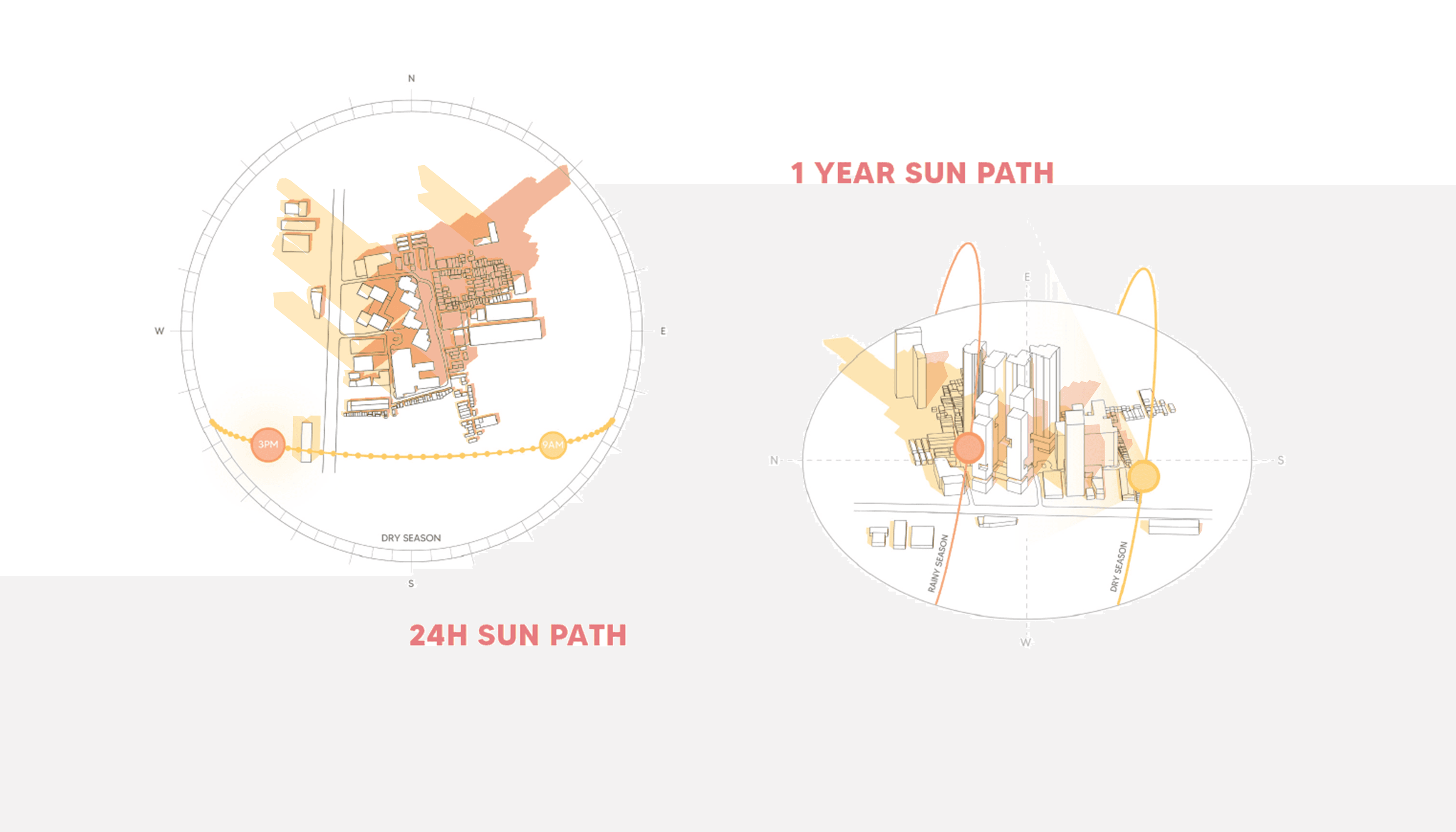
Figure 3: Sun path analysis identifies optimal building orientation and shading requirements by mapping seasonal solar angles to mitigate direct heat gain throughout the year.
Environmental studies heavily shaped the orientation and shading systems at Phnom Penh Commons. In Phnom Penh's intensely hot, monsoon-driven climate, sun path analysis allowed the design team to tune overhang depth and louvre placements to exact seasonal solar angles, minimizing direct solar gain on primary façades while preserving natural daylight.
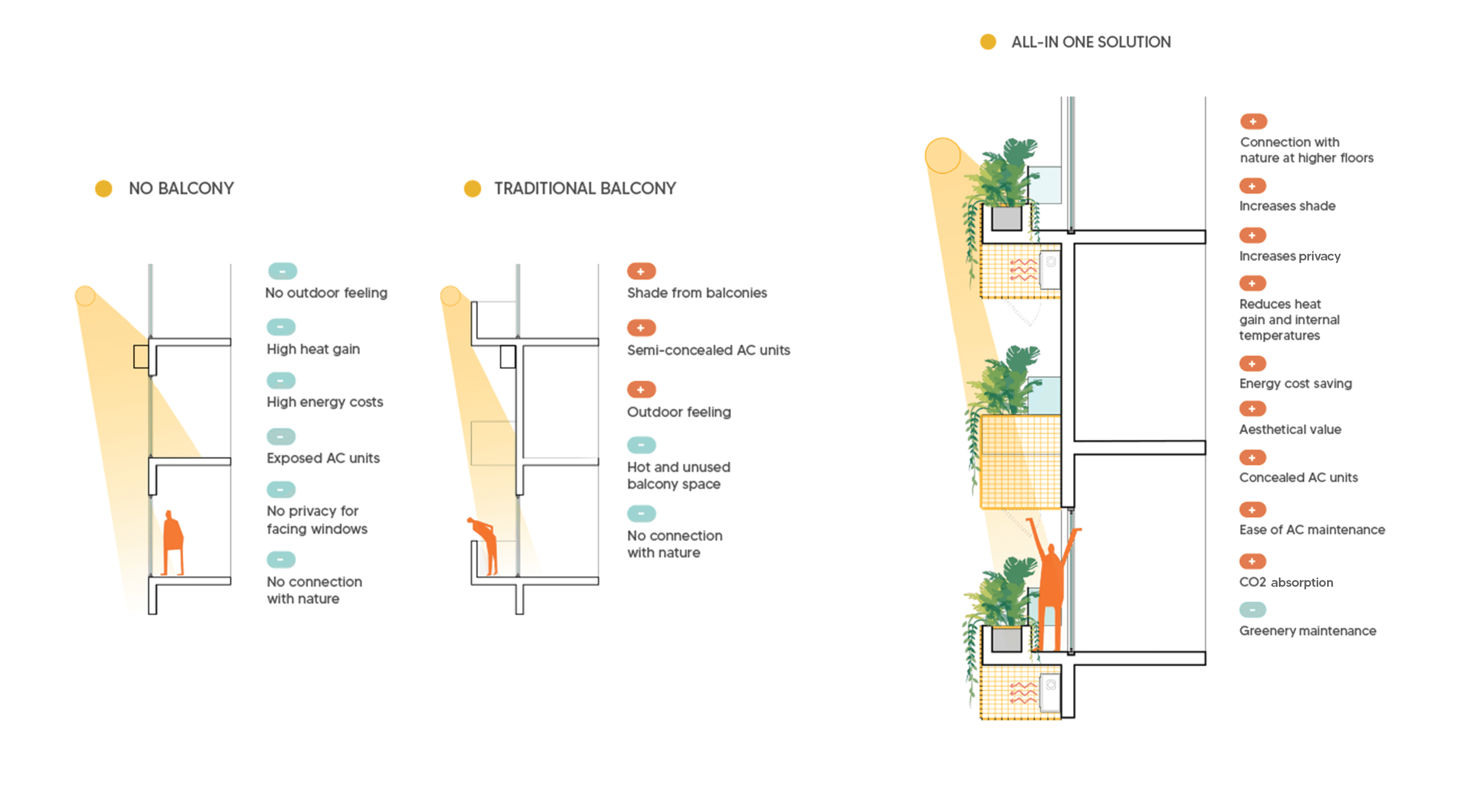
Figure 4: Comparative analysis of façade modules demonstrates how integrated shading, planting, and screening can reduce internal temperatures while improving usable outdoor space.
Residential façades were developed as modular environmental systems. Modules combine shading, planter integration, privacy control and AC enclosure within a single architectural element, reducing heat gain, improving usable outdoor space and supporting upper-level planting. Modular configuration also simplifies maintenance and allows the façade strategy to be adapted across different unit types. The same logic, which uses architectural elements to both protect occupants and deliver measurable performance, appears at a larger scale in Phnom Penh: AEON Mall’s parking canopies, for example, carry over 8,800 m² of solar panels and generate approximately 1.9 MW of energy (Aeon Mall Cambodia), simultaneously shading the site and offsetting peak cooling demand.
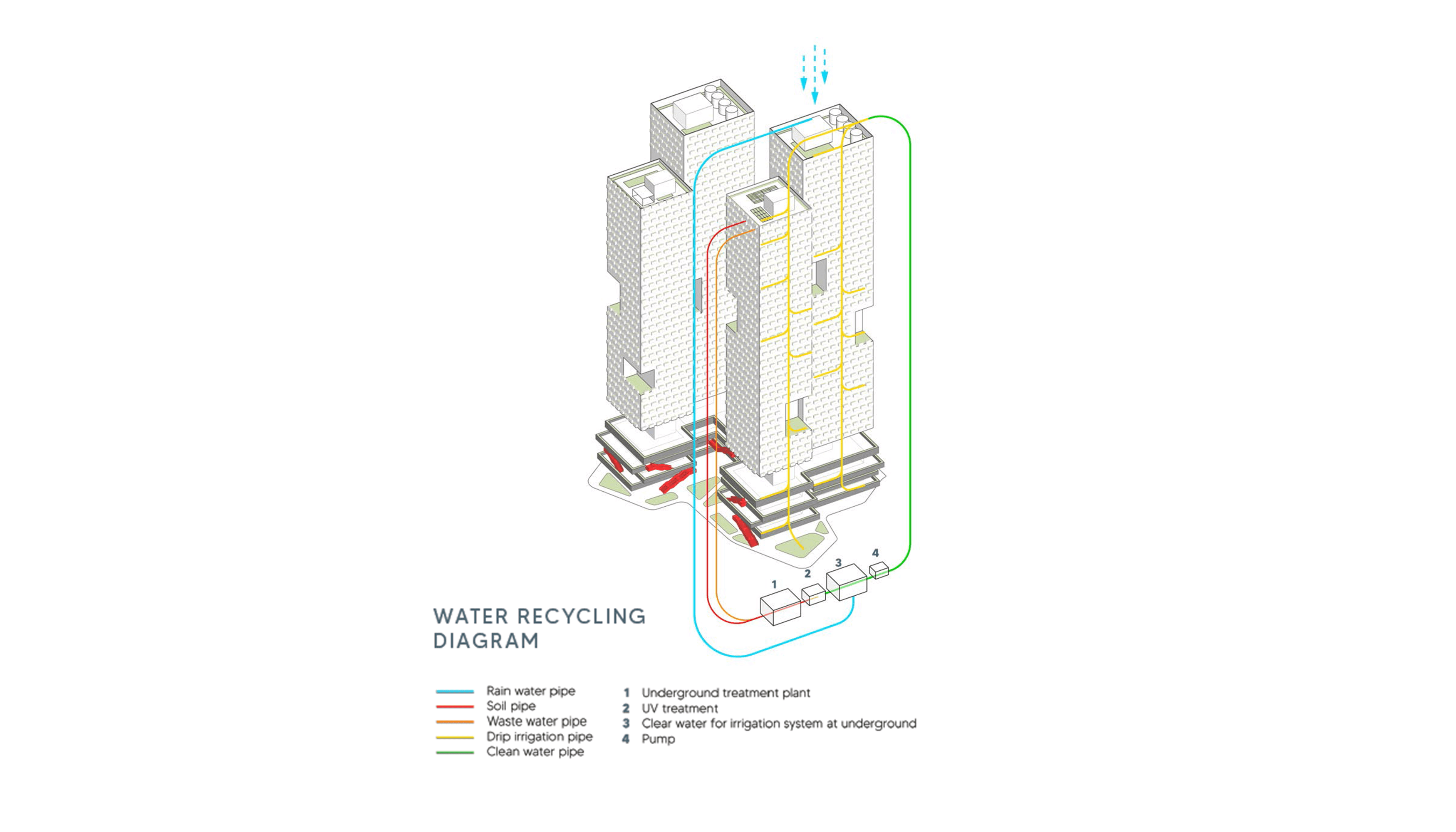
Figure 5: An integrated water management system collects and treats rainwater for landscape irrigation to reduce potable water demand and improve site resilience.
The project couples façade strategy with water management. Collected rainwater feeds planter irrigation through a central treatment and distribution system. Integrating water recycling lowers potable water demand and supports landscape performance during the dry season.
Design‑led sustainability means architecture sets the performance baseline and systems deliver the required outcomes.
" Building envelope decisions design the load, directly determining system requirements and total lifecycle cost. "
How to future‑proof buildings against rising energy costs
Energy performance must respond to changing occupancy patterns, tenant requirements and utility pricing.
Buildings with limited flexibility require major intervention to adapt. Projects designed with reserve capacity can respond with minimal disruption.
Reserve space for future plant upgrades, design risers to accept additional systems and maintain floor‑to‑floor heights that permit alternative mechanical strategies. These provisions support integration of on‑site generation, more efficient cooling or electrified systems without structural surgery.
Thermal buffer zones such as shaded corridors and double skin façades moderate environmental conditions while providing flexible, repurposable space. Adaptability results from planning decisions, not retrofits.
LEED Gold office in Phnom Penh: certification and operational performance
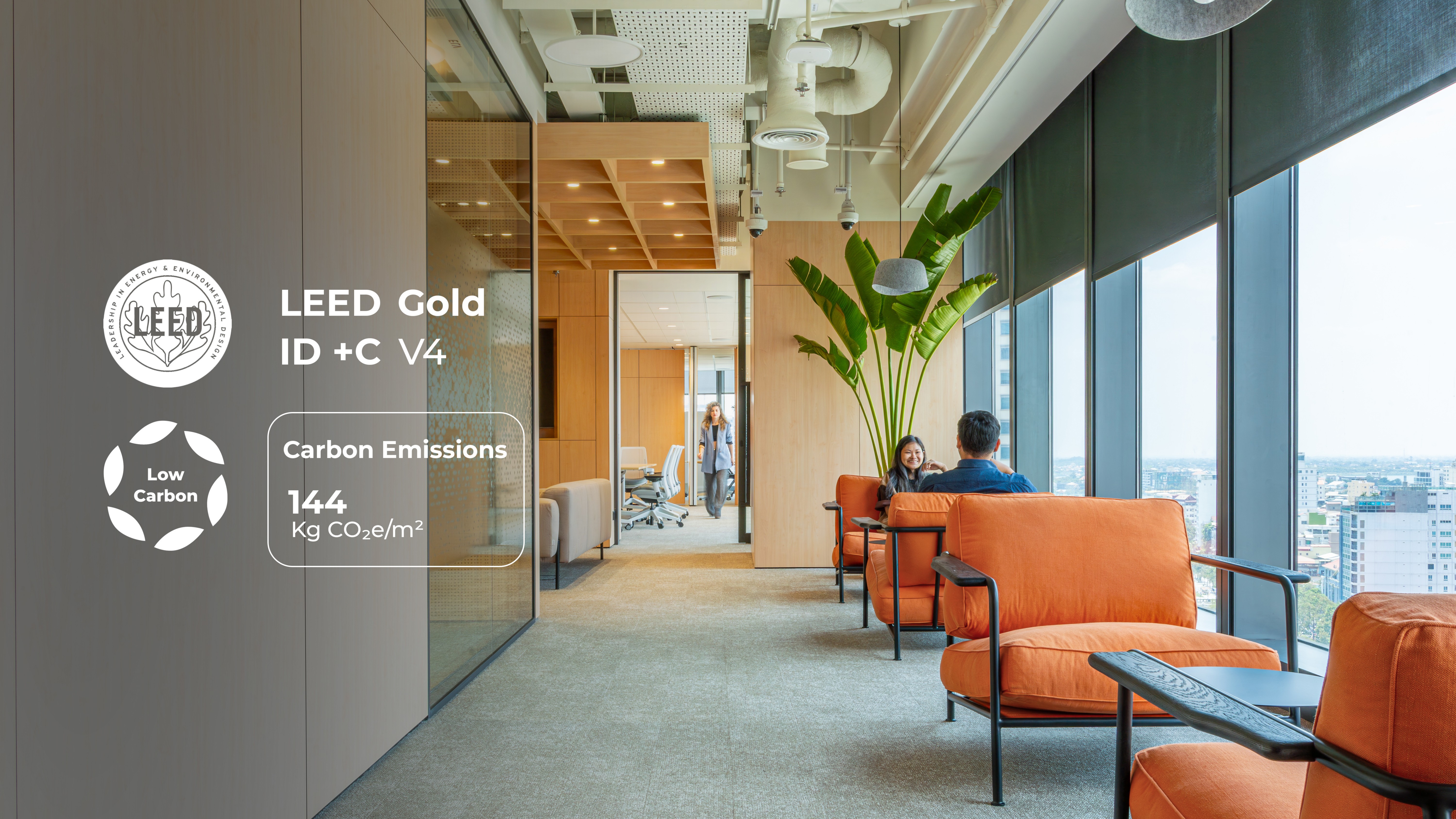
The first project in Cambodia to achieve LEED Gold ID+C v4 certification, balancing rigorous operational ROI with an elevated occupant experience.
The Multilateral Bank Office demonstrates certification used as a measurable verification system. The building (Vattanac Capital) already held LEED Gold, which provided the performance capacity for the project to achieve its outcomes. Façade performance and systems capacity were aligned with certification requirements, enabling the project team to set and meet measurable targets.
Early energy modelling informed envelope specification and system sizing. Commissioning confirmed that installed systems met design intent and that operational performance matched predictions. Documentation and measurement were integrated into delivery and provide evidence of performance after handover.
Spatial planning supported operational objectives. Daylight access, zoning strategies and indoor environmental quality were resolved alongside workplace requirements to support occupant comfort and operational efficiency.
View project outcomes and performance data.
How certified design future‑proofs commercial assets
Design decisions in the early stages determine a building’s capacity to perform over its lifecycle. Integrating façade‑led load reduction, passive strategies and provisions for adaptability converts sustainability from a cost exposure into a strategic asset.
Embedding certification frameworks into the design and delivery process creates measurable outcomes and narrows the gap between design intent and operational reality. This alignment of business objectives, user wellbeing and brand positioning supports asset resilience and market competitiveness.
To evaluate how these strategies can support your development goals, contact our team to explore performance-led options for your project.
Green building in Cambodia is becoming a defined requirement in how commercial buildings are planned and delivered. Energy demand, indoor environmental quality and operational performance now influence how projects are briefed, evaluated and positioned within the market. As a result, greater emphasis is being placed on early-stage design decisions that shape long-term building performance.
Figure 1: The MacLeamy Curve shows that the ability to impact cost and functional capability is highest during early design phases, while the cost of change rises sharply as the project progresses. (Source: Patrick MacLeamy / HOK, reproduced on ResearchGate).
Front-loading the design process allows developers to resolve complex performance requirements when the potential for impact is highest and the cost of implementation remains low. Strategic decisions made during these early phases ensure that the architecture serves as a high-performance asset rather than a liability. These early-stage façade and performance decisions resolve cost, user experience and brand positioning together. This integrated approach underpins tenant retention and establishes the building’s initial market reception.
Figure 2: The economics of project delivery illustrate that initial design and construction costs are a small fraction of the long-term revenue and operational costs over a building's lifecycle. (Source: Autodesk University).
By establishing an efficient operational platform at handover, early design choices control total cost of ownership and enable higher net operating income over time. Decisions that reduce heat gain, simplify maintenance and support reliable facility operations shift value toward revenue generation rather than remediation. This lifecycle perspective ensures that early investment translates into sustained market positioning and protected yields in Cambodia’s competitive commercial landscape.
How building design reduces energy use in tropical climates
Parametric modelling for tropical climates shows that smaller glazed areas, lower‑SHGC glass and modest horizontal overhangs together produce the largest modeled indoor temperature reductions, materially cutting cooling loads (Tong et al., 2021). In Cambodia, where cooling demand is driven by solar heat gain, these façade levers are especially effective: shading depth, glazing ratios, orientation and roof construction determine internal heat loads before mechanical systems are introduced. A well‑resolved envelope lowers cooling demand and allows smaller, more efficient plant, improving capital efficiency and long‑term operational performance.
Underperforming façades force larger plant and higher operating costs. Correctly resolved architecture sets system size and lifecycle cost from the outset.
A precise approach treats the building as a series of thermal zones. Circulation spaces, service cores and transitional areas operate under less intensive conditioning than primary workspaces. This reduces unnecessary energy demand while maintaining user comfort.
What LEED certification means for commercial buildings in Cambodia
LEED provides a consistent framework for setting and verifying performance targets. Early energy modelling, daylight analysis and material choices are tracked through documentation, commissioning and measurement, narrowing the gap between design intent and operational outcomes.
Corporate occupiers apply internal standards to environmental performance, air quality and workplace conditions. Certification establishes a measurable basis for comparison alongside location, cost and delivery timelines.
These considerations shape how workplace environments are planned and experienced, particularly in office developments where performance and user wellbeing are closely linked. As explored in Workplace Design for Performance.
Passive design strategies for Cambodia’s climate and urban conditions
Building performance depends on how design responds to site conditions.
Urban density, adjacent structures and surrounding heat sources influence airflow and solar exposure. Early‑stage massing and environmental studies allow design decisions to respond to measured conditions rather than assumptions.
Façade elements including deep overhangs, vertical fins and double-glazed windows reduce heat gain while maintaining daylight. Transitional spaces such as shaded terraces, voids and semi‑open corridors act as thermal buffers between exterior and interior environments. These technical responses echo traditional Khmer strategies. Raised living floors and shaded spaces beneath the house moderate solar gain and facilitate cross‑ventilation (Keo & Vorapat, 2025). In contemporary practice, raised podiums, recessed balconies and ventilated voids translate that logic into robust façade and massing strategies that reduce solar exposure while preserving usable footprint and occupant comfort.
Passive evaporative cooling further enhances this performance by employing water features or wetted surfaces to pre‑cool incoming air. Effective implementation treats this as a system where metered controls, water treatment, drainage and BMS‑linked sensors manage humidity and hygiene risks. When integrated correctly, this can shorten HVAC runtimes and cut peak mechanical demand without degrading indoor air quality.
Taken together, these strategies form a measured performance package that improves occupant comfort and reduces operating cost risk. Early integration, commissioning and a clear maintenance regime are essential to secure lifecycle benefits, with results validated through temperature, relative humidity and energy‑use metrics. Framed this way, passive design is a measurable asset that supports wellbeing, reduces operating cost and aligns the built form with long‑term business objectives.
Case reference: Phnom Penh Commons, a test case for façade design in Cambodia
Figure 3: Sun path analysis identifies optimal building orientation and shading requirements by mapping seasonal solar angles to mitigate direct heat gain throughout the year.
Environmental studies heavily shaped the orientation and shading systems at Phnom Penh Commons. In Phnom Penh's intensely hot, monsoon-driven climate, sun path analysis allowed the design team to tune overhang depth and louvre placements to exact seasonal solar angles, minimizing direct solar gain on primary façades while preserving natural daylight.
Figure 4: Comparative analysis of façade modules demonstrates how integrated shading, planting, and screening can reduce internal temperatures while improving usable outdoor space.
Residential façades were developed as modular environmental systems. Modules combine shading, planter integration, privacy control and AC enclosure within a single architectural element, reducing heat gain, improving usable outdoor space and supporting upper-level planting. Modular configuration also simplifies maintenance and allows the façade strategy to be adapted across different unit types. The same logic, which uses architectural elements to both protect occupants and deliver measurable performance, appears at a larger scale in Phnom Penh: AEON Mall’s parking canopies, for example, carry over 8,800 m² of solar panels and generate approximately 1.9 MW of energy (Aeon Mall Cambodia), simultaneously shading the site and offsetting peak cooling demand.
Figure 5: An integrated water management system collects and treats rainwater for landscape irrigation to reduce potable water demand and improve site resilience.
The project couples façade strategy with water management. Collected rainwater feeds planter irrigation through a central treatment and distribution system. Integrating water recycling lowers potable water demand and supports landscape performance during the dry season.
Design‑led sustainability means architecture sets the performance baseline and systems deliver the required outcomes.
" Building envelope decisions design the load, directly determining system requirements and total lifecycle cost. "
How to future‑proof buildings against rising energy costs
Energy performance must respond to changing occupancy patterns, tenant requirements and utility pricing.
Buildings with limited flexibility require major intervention to adapt. Projects designed with reserve capacity can respond with minimal disruption.
Reserve space for future plant upgrades, design risers to accept additional systems and maintain floor‑to‑floor heights that permit alternative mechanical strategies. These provisions support integration of on‑site generation, more efficient cooling or electrified systems without structural surgery.
Thermal buffer zones such as shaded corridors and double skin façades moderate environmental conditions while providing flexible, repurposable space. Adaptability results from planning decisions, not retrofits.
LEED Gold office in Phnom Penh: certification and operational performance
The first project in Cambodia to achieve LEED Gold ID+C v4 certification, balancing rigorous operational ROI with an elevated occupant experience.
The Multilateral Bank Office demonstrates certification used as a measurable verification system. The building (Vattanac Capital) already held LEED Gold, which provided the performance capacity for the project to achieve its outcomes. Façade performance and systems capacity were aligned with certification requirements, enabling the project team to set and meet measurable targets.
Early energy modelling informed envelope specification and system sizing. Commissioning confirmed that installed systems met design intent and that operational performance matched predictions. Documentation and measurement were integrated into delivery and provide evidence of performance after handover.
Spatial planning supported operational objectives. Daylight access, zoning strategies and indoor environmental quality were resolved alongside workplace requirements to support occupant comfort and operational efficiency.
View project outcomes and performance data.
How certified design future‑proofs commercial assets
Design decisions in the early stages determine a building’s capacity to perform over its lifecycle. Integrating façade‑led load reduction, passive strategies and provisions for adaptability converts sustainability from a cost exposure into a strategic asset.
Embedding certification frameworks into the design and delivery process creates measurable outcomes and narrows the gap between design intent and operational reality. This alignment of business objectives, user wellbeing and brand positioning supports asset resilience and market competitiveness.
To evaluate how these strategies can support your development goals, contact our team to explore performance-led options for your project.
Green building in Cambodia is becoming a defined requirement in how commercial buildings are planned and delivered. Energy demand, indoor environmental quality and operational performance now influence how projects are briefed, evaluated and positioned within the market. As a result, greater emphasis is being placed on early-stage design decisions that shape long-term building performance.
Figure 1: The MacLeamy Curve shows that the ability to impact cost and functional capability is highest during early design phases, while the cost of change rises sharply as the project progresses. (Source: Patrick MacLeamy / HOK, reproduced on ResearchGate).
Front-loading the design process allows developers to resolve complex performance requirements when the potential for impact is highest and the cost of implementation remains low. Strategic decisions made during these early phases ensure that the architecture serves as a high-performance asset rather than a liability. These early-stage façade and performance decisions resolve cost, user experience and brand positioning together. This integrated approach underpins tenant retention and establishes the building’s initial market reception.
Figure 2: The economics of project delivery illustrate that initial design and construction costs are a small fraction of the long-term revenue and operational costs over a building's lifecycle. (Source: Autodesk University).
By establishing an efficient operational platform at handover, early design choices control total cost of ownership and enable higher net operating income over time. Decisions that reduce heat gain, simplify maintenance and support reliable facility operations shift value toward revenue generation rather than remediation. This lifecycle perspective ensures that early investment translates into sustained market positioning and protected yields in Cambodia’s competitive commercial landscape.
How building design reduces energy use in tropical climates
Parametric modelling for tropical climates shows that smaller glazed areas, lower‑SHGC glass and modest horizontal overhangs together produce the largest modeled indoor temperature reductions, materially cutting cooling loads (Tong et al., 2021). In Cambodia, where cooling demand is driven by solar heat gain, these façade levers are especially effective: shading depth, glazing ratios, orientation and roof construction determine internal heat loads before mechanical systems are introduced. A well‑resolved envelope lowers cooling demand and allows smaller, more efficient plant, improving capital efficiency and long‑term operational performance.
Underperforming façades force larger plant and higher operating costs. Correctly resolved architecture sets system size and lifecycle cost from the outset.
A precise approach treats the building as a series of thermal zones. Circulation spaces, service cores and transitional areas operate under less intensive conditioning than primary workspaces. This reduces unnecessary energy demand while maintaining user comfort.
What LEED certification means for commercial buildings in Cambodia
LEED provides a consistent framework for setting and verifying performance targets. Early energy modelling, daylight analysis and material choices are tracked through documentation, commissioning and measurement, narrowing the gap between design intent and operational outcomes.
Corporate occupiers apply internal standards to environmental performance, air quality and workplace conditions. Certification establishes a measurable basis for comparison alongside location, cost and delivery timelines.
These considerations shape how workplace environments are planned and experienced, particularly in office developments where performance and user wellbeing are closely linked. As explored in Workplace Design for Performance.
Passive design strategies for Cambodia’s climate and urban conditions
Building performance depends on how design responds to site conditions.
Urban density, adjacent structures and surrounding heat sources influence airflow and solar exposure. Early‑stage massing and environmental studies allow design decisions to respond to measured conditions rather than assumptions.
Façade elements including deep overhangs, vertical fins and double-glazed windows reduce heat gain while maintaining daylight. Transitional spaces such as shaded terraces, voids and semi‑open corridors act as thermal buffers between exterior and interior environments. These technical responses echo traditional Khmer strategies. Raised living floors and shaded spaces beneath the house moderate solar gain and facilitate cross‑ventilation (Keo & Vorapat, 2025). In contemporary practice, raised podiums, recessed balconies and ventilated voids translate that logic into robust façade and massing strategies that reduce solar exposure while preserving usable footprint and occupant comfort.
Passive evaporative cooling further enhances this performance by employing water features or wetted surfaces to pre‑cool incoming air. Effective implementation treats this as a system where metered controls, water treatment, drainage and BMS‑linked sensors manage humidity and hygiene risks. When integrated correctly, this can shorten HVAC runtimes and cut peak mechanical demand without degrading indoor air quality.
Taken together, these strategies form a measured performance package that improves occupant comfort and reduces operating cost risk. Early integration, commissioning and a clear maintenance regime are essential to secure lifecycle benefits, with results validated through temperature, relative humidity and energy‑use metrics. Framed this way, passive design is a measurable asset that supports wellbeing, reduces operating cost and aligns the built form with long‑term business objectives.
Case reference: Phnom Penh Commons, a test case for façade design in Cambodia
Figure 3: Sun path analysis identifies optimal building orientation and shading requirements by mapping seasonal solar angles to mitigate direct heat gain throughout the year.
Environmental studies heavily shaped the orientation and shading systems at Phnom Penh Commons. In Phnom Penh's intensely hot, monsoon-driven climate, sun path analysis allowed the design team to tune overhang depth and louvre placements to exact seasonal solar angles, minimizing direct solar gain on primary façades while preserving natural daylight.
Figure 4: Comparative analysis of façade modules demonstrates how integrated shading, planting, and screening can reduce internal temperatures while improving usable outdoor space.
Residential façades were developed as modular environmental systems. Modules combine shading, planter integration, privacy control and AC enclosure within a single architectural element, reducing heat gain, improving usable outdoor space and supporting upper-level planting. Modular configuration also simplifies maintenance and allows the façade strategy to be adapted across different unit types. The same logic, which uses architectural elements to both protect occupants and deliver measurable performance, appears at a larger scale in Phnom Penh: AEON Mall’s parking canopies, for example, carry over 8,800 m² of solar panels and generate approximately 1.9 MW of energy (Aeon Mall Cambodia), simultaneously shading the site and offsetting peak cooling demand.
Figure 5: An integrated water management system collects and treats rainwater for landscape irrigation to reduce potable water demand and improve site resilience.
The project couples façade strategy with water management. Collected rainwater feeds planter irrigation through a central treatment and distribution system. Integrating water recycling lowers potable water demand and supports landscape performance during the dry season.
Design‑led sustainability means architecture sets the performance baseline and systems deliver the required outcomes.
" Building envelope decisions design the load, directly determining system requirements and total lifecycle cost. "
How to future‑proof buildings against rising energy costs
Energy performance must respond to changing occupancy patterns, tenant requirements and utility pricing.
Buildings with limited flexibility require major intervention to adapt. Projects designed with reserve capacity can respond with minimal disruption.
Reserve space for future plant upgrades, design risers to accept additional systems and maintain floor‑to‑floor heights that permit alternative mechanical strategies. These provisions support integration of on‑site generation, more efficient cooling or electrified systems without structural surgery.
Thermal buffer zones such as shaded corridors and double skin façades moderate environmental conditions while providing flexible, repurposable space. Adaptability results from planning decisions, not retrofits.
LEED Gold office in Phnom Penh: certification and operational performance
The first project in Cambodia to achieve LEED Gold ID+C v4 certification, balancing rigorous operational ROI with an elevated occupant experience.
The Multilateral Bank Office demonstrates certification used as a measurable verification system. The building (Vattanac Capital) already held LEED Gold, which provided the performance capacity for the project to achieve its outcomes. Façade performance and systems capacity were aligned with certification requirements, enabling the project team to set and meet measurable targets.
Early energy modelling informed envelope specification and system sizing. Commissioning confirmed that installed systems met design intent and that operational performance matched predictions. Documentation and measurement were integrated into delivery and provide evidence of performance after handover.
Spatial planning supported operational objectives. Daylight access, zoning strategies and indoor environmental quality were resolved alongside workplace requirements to support occupant comfort and operational efficiency.
View project outcomes and performance data.
How certified design future‑proofs commercial assets
Design decisions in the early stages determine a building’s capacity to perform over its lifecycle. Integrating façade‑led load reduction, passive strategies and provisions for adaptability converts sustainability from a cost exposure into a strategic asset.
Embedding certification frameworks into the design and delivery process creates measurable outcomes and narrows the gap between design intent and operational reality. This alignment of business objectives, user wellbeing and brand positioning supports asset resilience and market competitiveness.
To evaluate how these strategies can support your development goals, contact our team to explore performance-led options for your project.