How Can Hotels in Cambodia Define Their Niche and Win the Market?
How Can Hotels in Cambodia Define Their Niche and Win the Market?
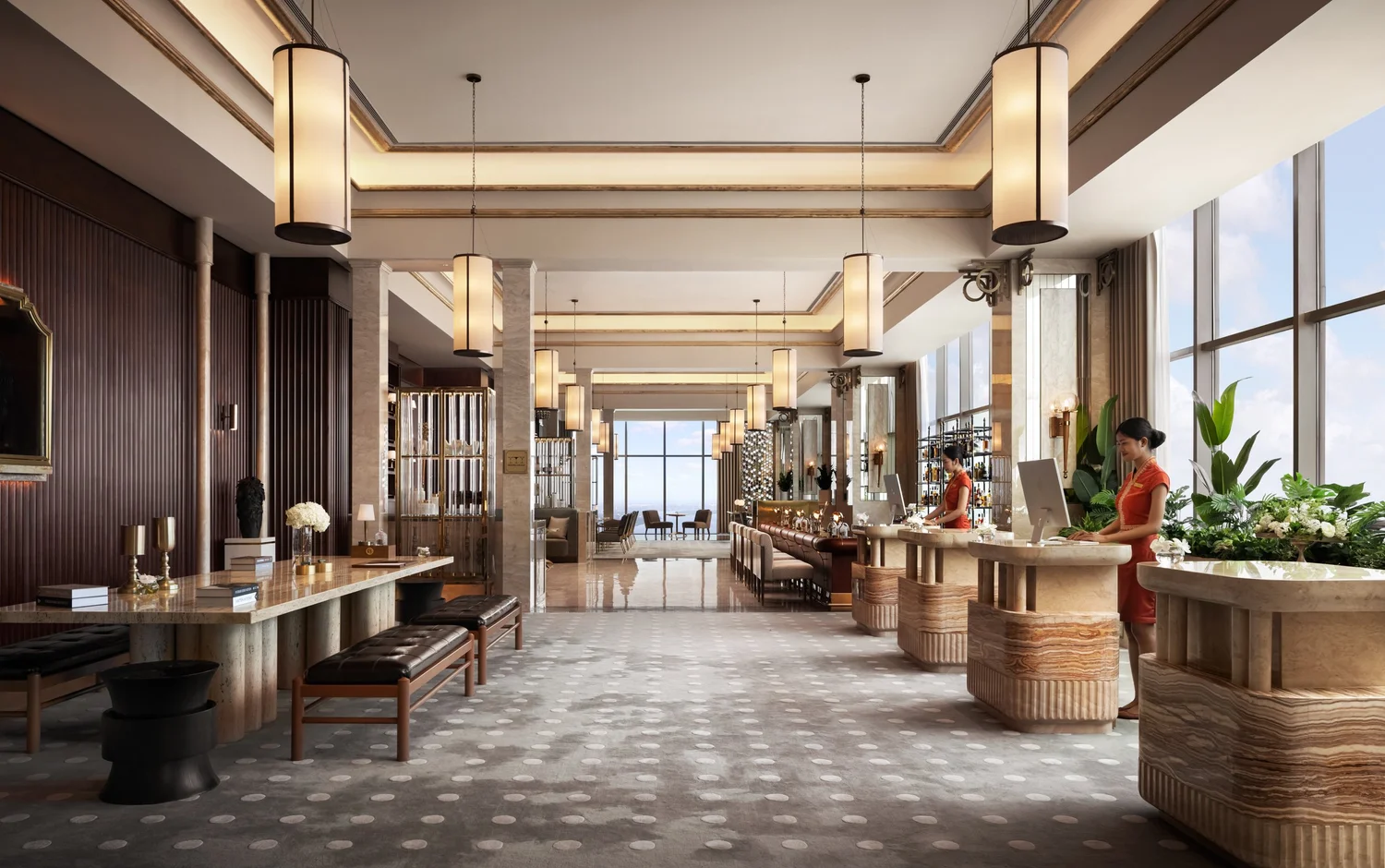
Shangri-La, Phnom Penh. Courtesy of Robert Kleiner.
The expansion of Cambodia’s hospitality sector is currently outpacing historic regional growth trajectories. With international arrivals reaching approximately 5.43 million in 2023 (Ministry of Tourism) and major brands including Hyatt, Marriott, and Accor scheduled to deliver new inventory by 2027, the market is entering a phase of high-volume competition. However, beyond the headline growth, performance metrics reveal a widening gap between generic properties and strategically positioned niche hotels.
The performance gap between high-concept boutique properties and generic city hotels suggests that design-led positioning acts as a primary driver of rate integrity and asset valuation. Defining a property's market niche is a fundamental step in pre-development. For operators exploring segments in Cambodia, aligning design strategy with long-term ROI is an essential risk-mitigation tool.
Why defining your hotel’s niche matters in Cambodia
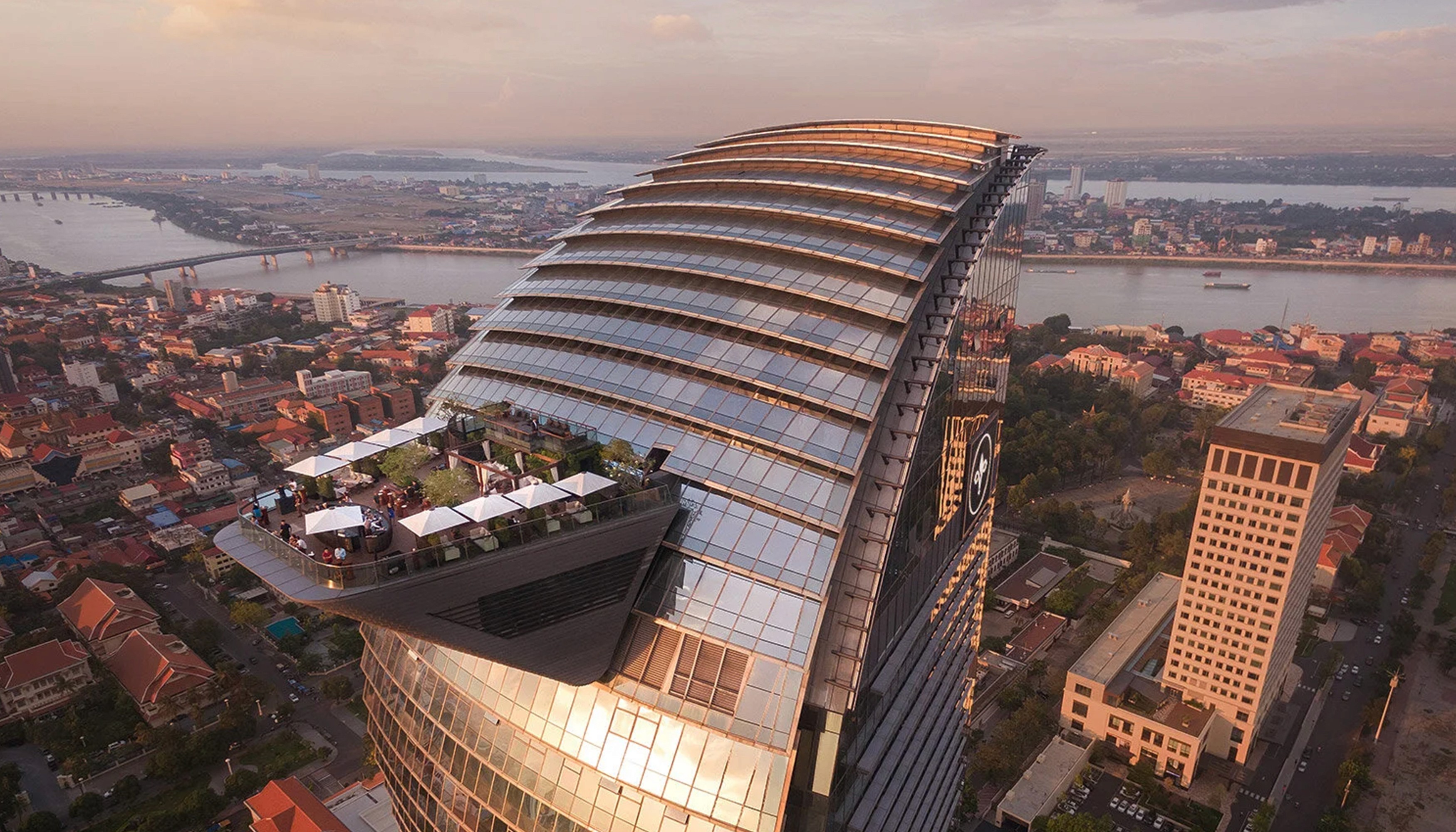
Rosewood, Phnom Penh. Courtesy of Robert Kleiner.
Strategic differentiation in hospitality often follows the precedent set by early pioneers of "sense of place," where specific design narratives allowed properties to command rates significantly above market averages. Successful Cambodian properties now apply this principle, acknowledging that specificity drives profitability while generic offerings are forced to compete primarily on price.
Properties with clearly defined niches frequently achieve higher Revenue Per Available Room (RevPAR) and are better equipped to maintain rate integrity through low seasons (Asian Hospitality). For instance, properties that employ a "theatrical placemaking" approach, in which every design element contributes to a cohesive narrative, often maintain an Average Daily Rate (ADR) that exceeds their competitive set.
Strategic design also allows for the adaptation of global philosophies to the local context. Authentic cultural integration and international operating standards are increasingly viewed as complementary rather than competing priorities, reinforcing the property's value proposition to both regional and international guests.
How design strategy drives ROI in Cambodia’s hotel market
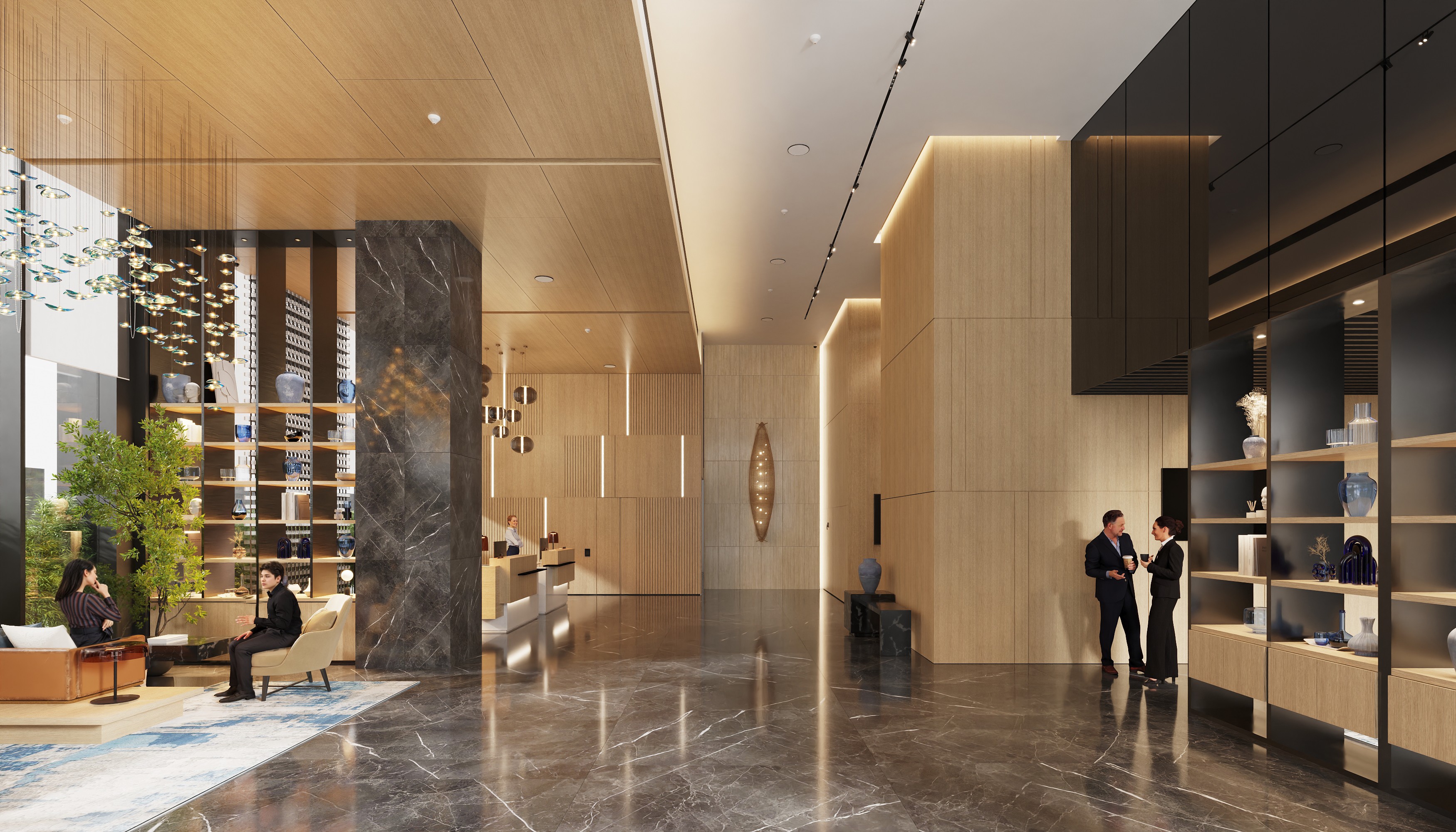
Fairfield by Marriott by The Room Architecture and Design.
The Cambodia hotel market has matured, and with increased choice comes higher guest expectations. City breaks, cultural tourism, and the "bleisure" segment now sit side by side on the same booking platforms, forcing properties to communicate their value proposition instantly.
The Room Architecture and Design’s work on Fairfield by Marriott illustrates how international brand standards can be successfully adapted to the Cambodian market while maintaining rigorous operational efficiency. By integrating local design elements within a global framework, a property can resonate with both international business travelers and regional guests.
When design and strategy align from the initial guest interaction, the brand achieves a premium position that registers in memory and supports long-term loyalty.
Design trends driving hotel success in Phnom Penh
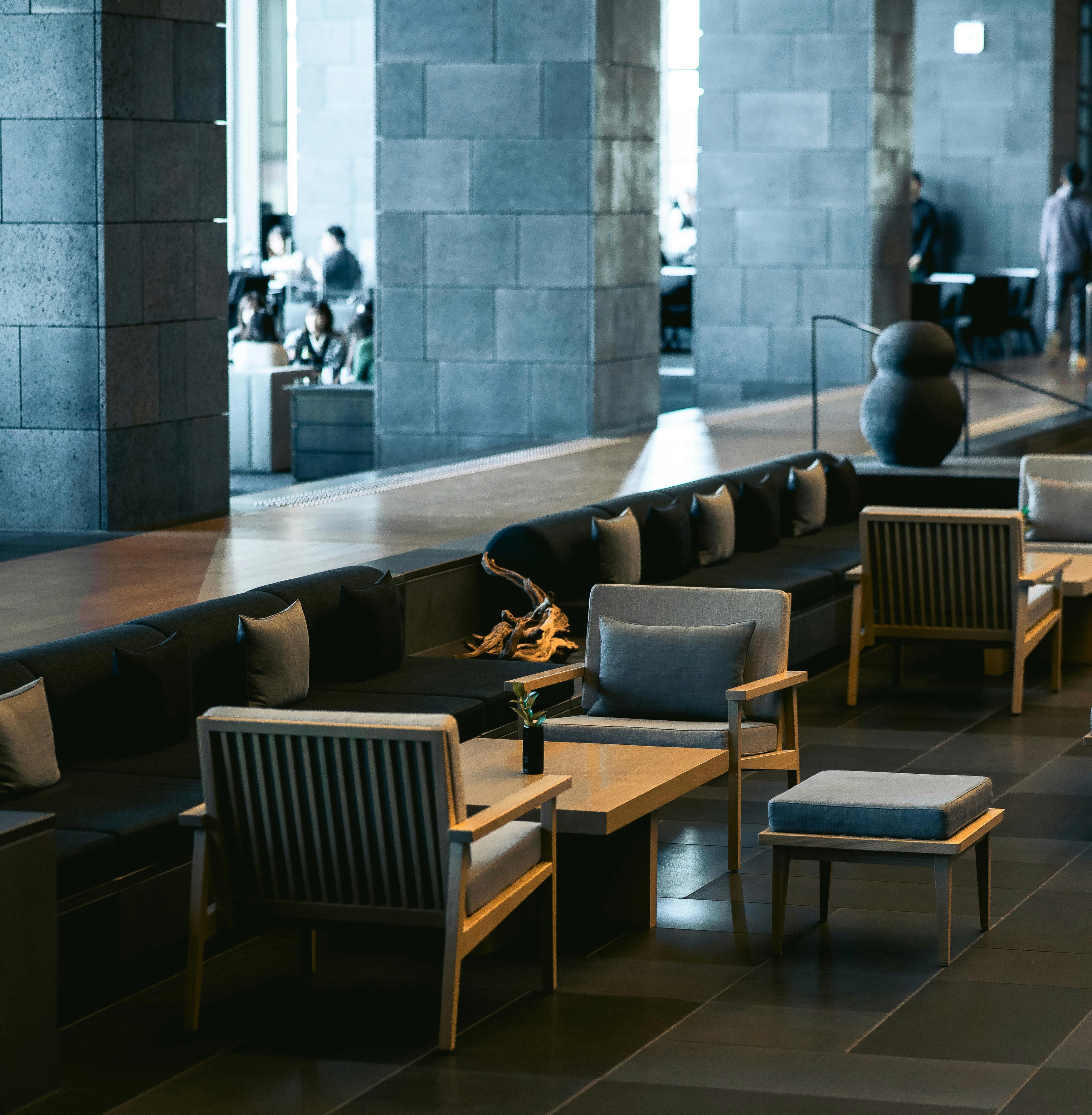
Aman Hotel Tokyo Lounge. Photo by Szymon Shields via Pexels.
Positioning extends beyond marketing into the way space is utilized daily. Minimalist approaches demonstrate how restraint can create luxury through the intelligent use of space and light, while maximalist social environments focus on driving F&B revenue. Both approaches show viability when the spatial strategy is aligned with a specific revenue model.
In Phnom Penh, successful urban hotels utilize ground floors that transition between hotel lobby, co-working space, and neighborhood café. This design approach captures revenue throughout the day: business meetings at 10 am, lunch crowds at noon, and social dining by evening.
Properties designed with these activated public spaces frequently report F&B revenue contributions reaching 35 to 40 percent of total income, representing a significant increase over the regional industry standard of approximately 25 percent (CBRE).
Navigating operational challenges in Cambodia
While Cambodia offers compelling opportunities, international operators must navigate specific logistical and quality control challenges that impact development.
Construction and quality oversight
Maintaining international standards requires careful contractor selection and technical oversight. Proper project management with milestone quality audits can reduce construction rework by up to 20 percent, supporting consistent quality outcomes as documented in global construction best practices.

An artisan expertly weavingcolorfulthreads on a traditional wooden loom. AI-generated image by Gemini.
Supply chain optimization
Import duties and logistics can significantly impact Furniture, Fixtures & Equipment (FF&E) budgets. Leveraging local artisans and suppliers for hotel-grade furnishings typically delivers a 10 to 30 percent saving compared to full import strategies, while providing distinct, custom touchpoints (Beltmann Logistics).
Operational training infrastructure
Finding and training staff to international standards is an ongoing priority. Properties that invest in comprehensive training programs and infrastructure report staff turnover reductions of over 50 percent in some cases, alongside measurable improvements in guest satisfaction (Eurocham).
Cultural integration as a revenue driver
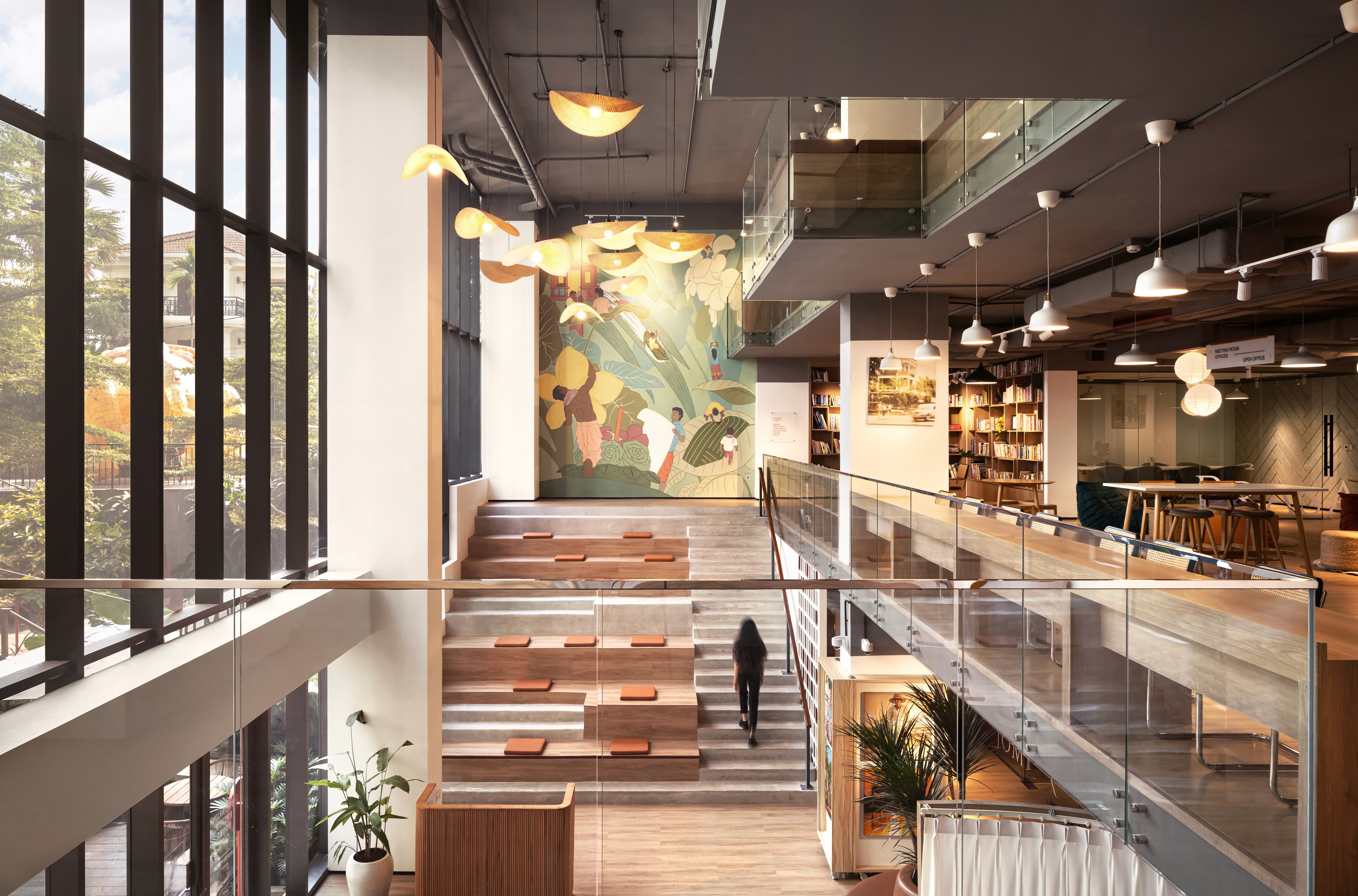
A mural by Khmer-Dutch artist Ryysa, inspired by daily habits of respect and community, celebrates the values that bring people together. Find out more about Siem Reap House here.
Successful properties in Cambodia integrate local identity for both practical and experiential purposes. Traditional craft, pattern, and proportion guide movement through space and shape gathering areas that feel both international and distinctly Cambodian.
Custom artwork from local artists and traditional patterns integrated into design elements create a "sense of place" without compromising brand consistency. Studies confirm that partnering with local suppliers can reduce procurement costs by 10 to 30 percent, while supporting ADR premiums of 20 to 30 percent over market averages. Hotels achieving this high level of integration often maintain an ADR 27 percent above their direct competitive set (Samskara Projects).
Sustainability and technology as imperatives
Forward-thinking properties recognize that sustainability and technology represent investments delivering measurable returns. Properties with verified green operations often command rate premiums, while those investing in comprehensive CRM and personalization systems achieve significantly higher repeat guest rates (Amadeus Hospitality).
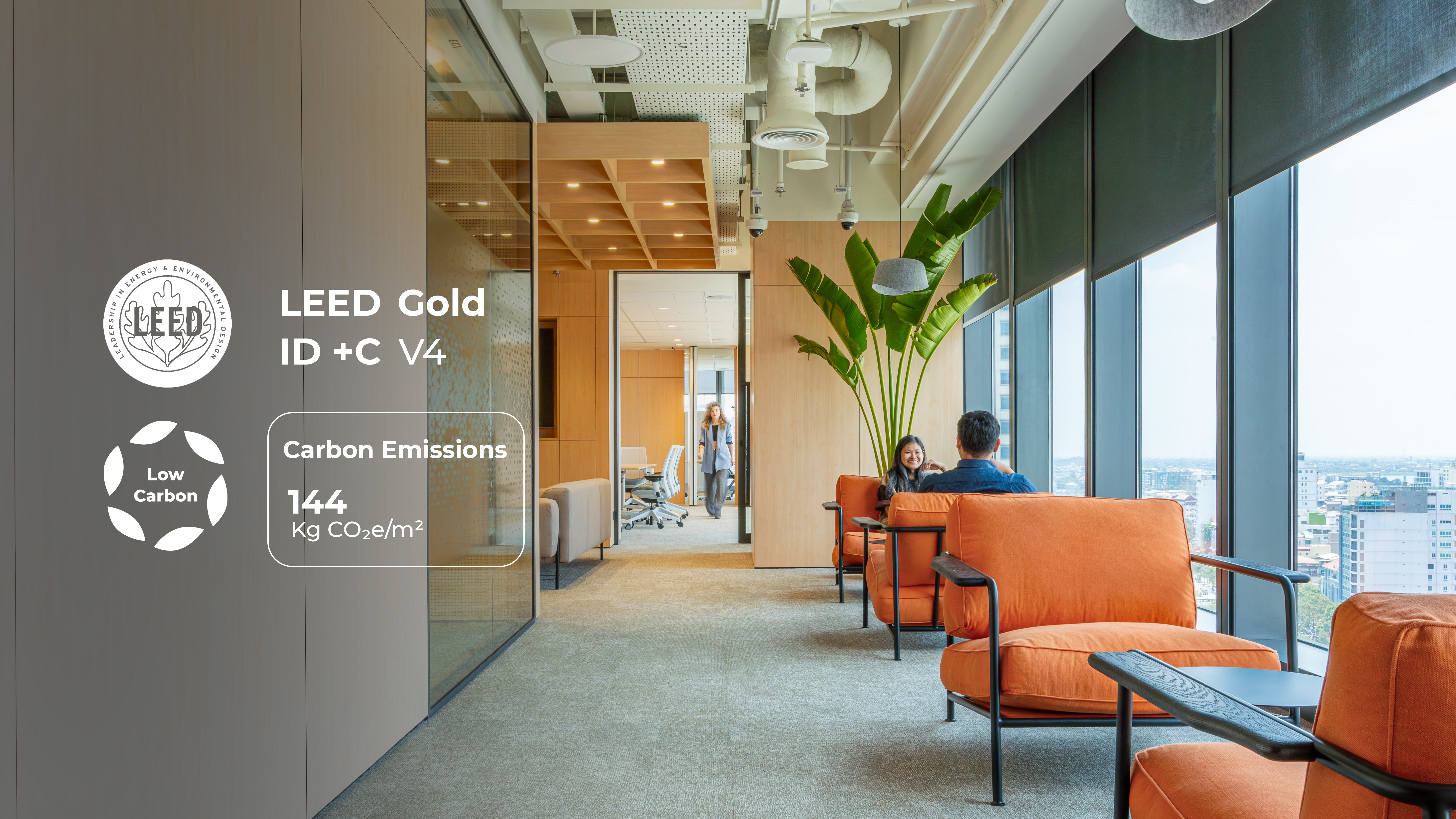
The first LEED Gold Certified Office Interior in Cambodia achieving 36% energy reduction. Find out more here.
Incorporating energy-efficient systems can achieve a 30 percent energy reduction compared to regional benchmarks. Strategic sustainability investments typically generate ROI within 3.5 years through operational savings while supporting global brand commitments (Sustainable Hospitality Alliance). Furthermore, green credentials have become essential differentiators in corporate Request for Proposals (RFPs).
What are Cambodia’s market dynamics and success stories?
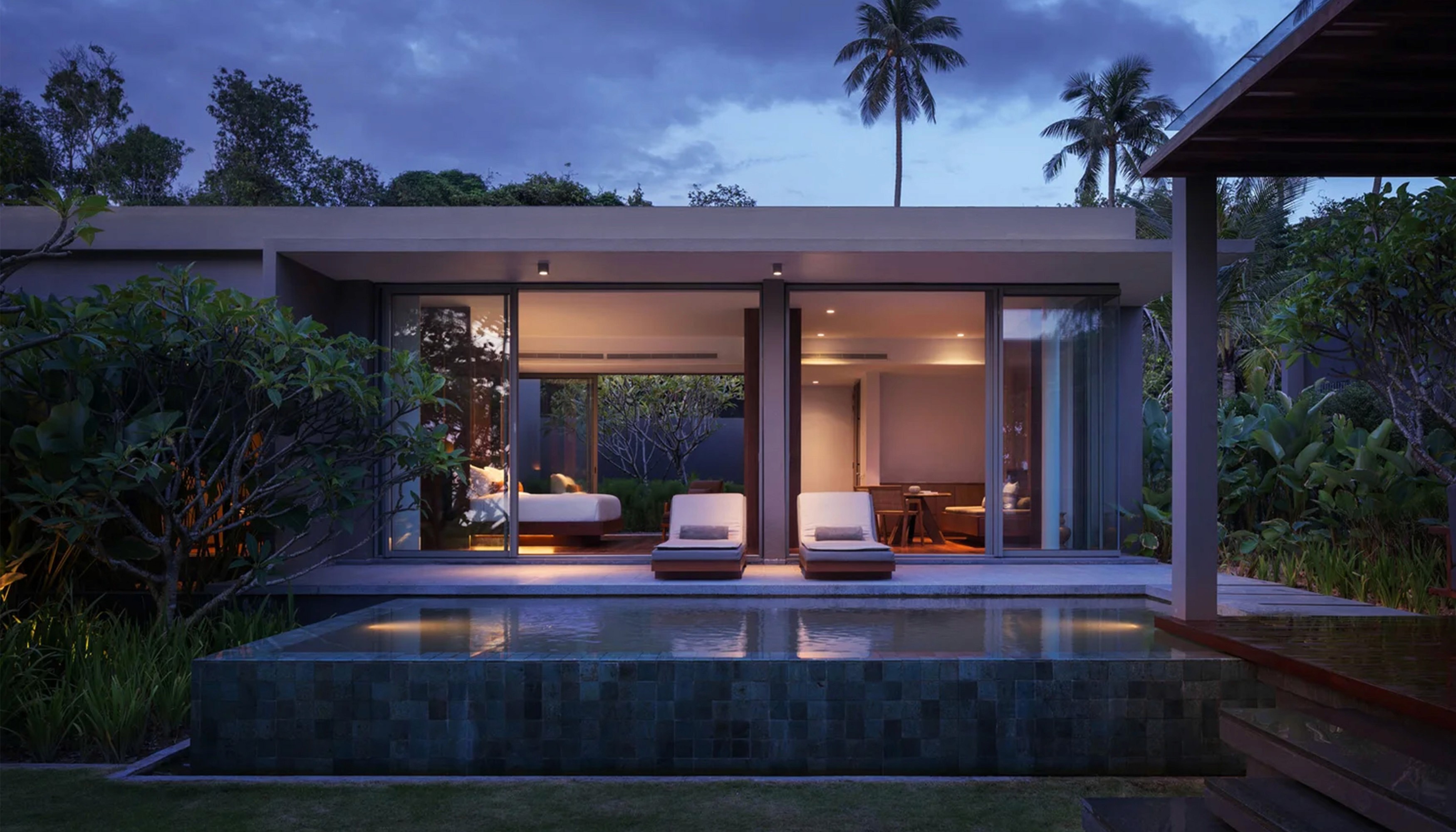
Koh Russey Resort. Courtesy of Robert Kleiner.
Current market leaders demonstrate how international best practices can adapt to local context while maintaining brand integrity.
Rosewood Phnom Penh balances brand standards with local interpretation through strategic artisan partnerships that reduce FF&E costs and create distinct touchpoints.
Park Hyatt Siem Reap uses theatrical design to support premium rates through storytelling that carries across the guest experience. Its performance reflects the market’s capacity for luxury pricing when the experience justifies it.
Alila Villas Koh Russey shows how international brand standards can adapt to beach resort operations while retaining local authenticity. The result supports operational efficiency while contributing to stronger guest satisfaction.
Implementation strategies for winning hotels
Based on our experience with international brands and Southeast Asian markets, high-performing hotels consistently execute five strategic moves:
Define guest profiles with precision: Move beyond demographics to behavioral analysis. Identify weekday business and weekend leisure patterns to maximize asset utilization.
Design the daily journey intentionally: Map guest flow to identify friction points and revenue opportunities.
Optimize operations for a specific niche: Work with operators to define custom KPIs aligned with the property’s positioning.
Integrate local culture strategically: Collaborate with local artisans and suppliers to reduce costs while strengthening market positioning.
Build flexibility into the model: Design properties with conversion capabilities, such as meeting rooms that become wellness spaces, to maintain relevance as markets evolve.
A market for strategic positioning
The Cambodia hotel market offers opportunities for properties that commit to strategic positioning through design. Success comes when design strategy aligns with market opportunity, capturing premium rates and sustaining performance through market cycles.
Contact The Room Architecture and Design to schedule a strategic consultation or request a professional property assessment.
The expansion of Cambodia’s hospitality sector is currently outpacing historic regional growth trajectories. With international arrivals reaching approximately 5.43 million in 2023 (Ministry of Tourism) and major brands including Hyatt, Marriott, and Accor scheduled to deliver new inventory by 2027, the market is entering a phase of high-volume competition. However, beyond the headline growth, performance metrics reveal a widening gap between generic properties and strategically positioned niche hotels.
The performance gap between high-concept boutique properties and generic city hotels suggests that design-led positioning acts as a primary driver of rate integrity and asset valuation. Defining a property's market niche is a fundamental step in pre-development. For operators exploring segments in Cambodia, aligning design strategy with long-term ROI is an essential risk-mitigation tool.
Why defining your hotel’s niche matters in Cambodia
Rosewood, Phnom Penh. Courtesy of Robert Kleiner.
Strategic differentiation in hospitality often follows the precedent set by early pioneers of "sense of place," where specific design narratives allowed properties to command rates significantly above market averages. Successful Cambodian properties now apply this principle, acknowledging that specificity drives profitability while generic offerings are forced to compete primarily on price.
Properties with clearly defined niches frequently achieve higher Revenue Per Available Room (RevPAR) and are better equipped to maintain rate integrity through low seasons (Asian Hospitality). For instance, properties that employ a "theatrical placemaking" approach, in which every design element contributes to a cohesive narrative, often maintain an Average Daily Rate (ADR) that exceeds their competitive set.
Strategic design also allows for the adaptation of global philosophies to the local context. Authentic cultural integration and international operating standards are increasingly viewed as complementary rather than competing priorities, reinforcing the property's value proposition to both regional and international guests.
How design strategy drives ROI in Cambodia’s hotel market
Fairfield by Marriott by The Room Architecture and Design.
The Cambodia hotel market has matured, and with increased choice comes higher guest expectations. City breaks, cultural tourism, and the "bleisure" segment now sit side by side on the same booking platforms, forcing properties to communicate their value proposition instantly.
The Room Architecture and Design’s work on Fairfield by Marriott illustrates how international brand standards can be successfully adapted to the Cambodian market while maintaining rigorous operational efficiency. By integrating local design elements within a global framework, a property can resonate with both international business travelers and regional guests.
When design and strategy align from the initial guest interaction, the brand achieves a premium position that registers in memory and supports long-term loyalty.
Design trends driving hotel success in Phnom Penh
Aman Hotel Tokyo Lounge. Photo by Szymon Shields via Pexels.
Positioning extends beyond marketing into the way space is utilized daily. Minimalist approaches demonstrate how restraint can create luxury through the intelligent use of space and light, while maximalist social environments focus on driving F&B revenue. Both approaches show viability when the spatial strategy is aligned with a specific revenue model.
In Phnom Penh, successful urban hotels utilize ground floors that transition between hotel lobby, co-working space, and neighborhood café. This design approach captures revenue throughout the day: business meetings at 10 am, lunch crowds at noon, and social dining by evening.
Properties designed with these activated public spaces frequently report F&B revenue contributions reaching 35 to 40 percent of total income, representing a significant increase over the regional industry standard of approximately 25 percent (CBRE).
Navigating operational challenges in Cambodia
While Cambodia offers compelling opportunities, international operators must navigate specific logistical and quality control challenges that impact development.
Construction and quality oversight
Maintaining international standards requires careful contractor selection and technical oversight. Proper project management with milestone quality audits can reduce construction rework by up to 20 percent, supporting consistent quality outcomes as documented in global construction best practices.
An artisan expertly weavingcolorfulthreads on a traditional wooden loom. AI-generated image by Gemini.
Supply chain optimization
Import duties and logistics can significantly impact Furniture, Fixtures & Equipment (FF&E) budgets. Leveraging local artisans and suppliers for hotel-grade furnishings typically delivers a 10 to 30 percent saving compared to full import strategies, while providing distinct, custom touchpoints (Beltmann Logistics).
Operational training infrastructure
Finding and training staff to international standards is an ongoing priority. Properties that invest in comprehensive training programs and infrastructure report staff turnover reductions of over 50 percent in some cases, alongside measurable improvements in guest satisfaction (Eurocham).
Cultural integration as a revenue driver
A mural by Khmer-Dutch artist Ryysa, inspired by daily habits of respect and community, celebrates the values that bring people together. Find out more about Siem Reap House here.
Successful properties in Cambodia integrate local identity for both practical and experiential purposes. Traditional craft, pattern, and proportion guide movement through space and shape gathering areas that feel both international and distinctly Cambodian.
Custom artwork from local artists and traditional patterns integrated into design elements create a "sense of place" without compromising brand consistency. Studies confirm that partnering with local suppliers can reduce procurement costs by 10 to 30 percent, while supporting ADR premiums of 20 to 30 percent over market averages. Hotels achieving this high level of integration often maintain an ADR 27 percent above their direct competitive set (Samskara Projects).
Sustainability and technology as imperatives
Forward-thinking properties recognize that sustainability and technology represent investments delivering measurable returns. Properties with verified green operations often command rate premiums, while those investing in comprehensive CRM and personalization systems achieve significantly higher repeat guest rates (Amadeus Hospitality).
The first LEED Gold Certified Office Interior in Cambodia achieving 36% energy reduction. Find out more here.
Incorporating energy-efficient systems can achieve a 30 percent energy reduction compared to regional benchmarks. Strategic sustainability investments typically generate ROI within 3.5 years through operational savings while supporting global brand commitments (Sustainable Hospitality Alliance). Furthermore, green credentials have become essential differentiators in corporate Request for Proposals (RFPs).
What are Cambodia’s market dynamics and success stories?
Koh Russey Resort. Courtesy of Robert Kleiner.
Current market leaders demonstrate how international best practices can adapt to local context while maintaining brand integrity.
Rosewood Phnom Penh balances brand standards with local interpretation through strategic artisan partnerships that reduce FF&E costs and create distinct touchpoints.
Park Hyatt Siem Reap uses theatrical design to support premium rates through storytelling that carries across the guest experience. Its performance reflects the market’s capacity for luxury pricing when the experience justifies it.
Alila Villas Koh Russey shows how international brand standards can adapt to beach resort operations while retaining local authenticity. The result supports operational efficiency while contributing to stronger guest satisfaction.
Implementation strategies for winning hotels
Based on our experience with international brands and Southeast Asian markets, high-performing hotels consistently execute five strategic moves:
Define guest profiles with precision: Move beyond demographics to behavioral analysis. Identify weekday business and weekend leisure patterns to maximize asset utilization.
Design the daily journey intentionally: Map guest flow to identify friction points and revenue opportunities.
Optimize operations for a specific niche: Work with operators to define custom KPIs aligned with the property’s positioning.
Integrate local culture strategically: Collaborate with local artisans and suppliers to reduce costs while strengthening market positioning.
Build flexibility into the model: Design properties with conversion capabilities, such as meeting rooms that become wellness spaces, to maintain relevance as markets evolve.
A market for strategic positioning
The Cambodia hotel market offers opportunities for properties that commit to strategic positioning through design. Success comes when design strategy aligns with market opportunity, capturing premium rates and sustaining performance through market cycles.
Contact The Room Architecture and Design to schedule a strategic consultation or request a professional property assessment.
The expansion of Cambodia’s hospitality sector is currently outpacing historic regional growth trajectories. With international arrivals reaching approximately 5.43 million in 2023 (Ministry of Tourism) and major brands including Hyatt, Marriott, and Accor scheduled to deliver new inventory by 2027, the market is entering a phase of high-volume competition. However, beyond the headline growth, performance metrics reveal a widening gap between generic properties and strategically positioned niche hotels.
The performance gap between high-concept boutique properties and generic city hotels suggests that design-led positioning acts as a primary driver of rate integrity and asset valuation. Defining a property's market niche is a fundamental step in pre-development. For operators exploring segments in Cambodia, aligning design strategy with long-term ROI is an essential risk-mitigation tool.
Why defining your hotel’s niche matters in Cambodia
Rosewood, Phnom Penh. Courtesy of Robert Kleiner.
Strategic differentiation in hospitality often follows the precedent set by early pioneers of "sense of place," where specific design narratives allowed properties to command rates significantly above market averages. Successful Cambodian properties now apply this principle, acknowledging that specificity drives profitability while generic offerings are forced to compete primarily on price.
Properties with clearly defined niches frequently achieve higher Revenue Per Available Room (RevPAR) and are better equipped to maintain rate integrity through low seasons (Asian Hospitality). For instance, properties that employ a "theatrical placemaking" approach, in which every design element contributes to a cohesive narrative, often maintain an Average Daily Rate (ADR) that exceeds their competitive set.
Strategic design also allows for the adaptation of global philosophies to the local context. Authentic cultural integration and international operating standards are increasingly viewed as complementary rather than competing priorities, reinforcing the property's value proposition to both regional and international guests.
How design strategy drives ROI in Cambodia’s hotel market
Fairfield by Marriott by The Room Architecture and Design.
The Cambodia hotel market has matured, and with increased choice comes higher guest expectations. City breaks, cultural tourism, and the "bleisure" segment now sit side by side on the same booking platforms, forcing properties to communicate their value proposition instantly.
The Room Architecture and Design’s work on Fairfield by Marriott illustrates how international brand standards can be successfully adapted to the Cambodian market while maintaining rigorous operational efficiency. By integrating local design elements within a global framework, a property can resonate with both international business travelers and regional guests.
When design and strategy align from the initial guest interaction, the brand achieves a premium position that registers in memory and supports long-term loyalty.
Design trends driving hotel success in Phnom Penh
Aman Hotel Tokyo Lounge. Photo by Szymon Shields via Pexels.
Positioning extends beyond marketing into the way space is utilized daily. Minimalist approaches demonstrate how restraint can create luxury through the intelligent use of space and light, while maximalist social environments focus on driving F&B revenue. Both approaches show viability when the spatial strategy is aligned with a specific revenue model.
In Phnom Penh, successful urban hotels utilize ground floors that transition between hotel lobby, co-working space, and neighborhood café. This design approach captures revenue throughout the day: business meetings at 10 am, lunch crowds at noon, and social dining by evening.
Properties designed with these activated public spaces frequently report F&B revenue contributions reaching 35 to 40 percent of total income, representing a significant increase over the regional industry standard of approximately 25 percent (CBRE).
Navigating operational challenges in Cambodia
While Cambodia offers compelling opportunities, international operators must navigate specific logistical and quality control challenges that impact development.
Construction and quality oversight
Maintaining international standards requires careful contractor selection and technical oversight. Proper project management with milestone quality audits can reduce construction rework by up to 20 percent, supporting consistent quality outcomes as documented in global construction best practices.
An artisan expertly weavingcolorfulthreads on a traditional wooden loom. AI-generated image by Gemini.
Supply chain optimization
Import duties and logistics can significantly impact Furniture, Fixtures & Equipment (FF&E) budgets. Leveraging local artisans and suppliers for hotel-grade furnishings typically delivers a 10 to 30 percent saving compared to full import strategies, while providing distinct, custom touchpoints (Beltmann Logistics).
Operational training infrastructure
Finding and training staff to international standards is an ongoing priority. Properties that invest in comprehensive training programs and infrastructure report staff turnover reductions of over 50 percent in some cases, alongside measurable improvements in guest satisfaction (Eurocham).
Cultural integration as a revenue driver
A mural by Khmer-Dutch artist Ryysa, inspired by daily habits of respect and community, celebrates the values that bring people together. Find out more about Siem Reap House here.
Successful properties in Cambodia integrate local identity for both practical and experiential purposes. Traditional craft, pattern, and proportion guide movement through space and shape gathering areas that feel both international and distinctly Cambodian.
Custom artwork from local artists and traditional patterns integrated into design elements create a "sense of place" without compromising brand consistency. Studies confirm that partnering with local suppliers can reduce procurement costs by 10 to 30 percent, while supporting ADR premiums of 20 to 30 percent over market averages. Hotels achieving this high level of integration often maintain an ADR 27 percent above their direct competitive set (Samskara Projects).
Sustainability and technology as imperatives
Forward-thinking properties recognize that sustainability and technology represent investments delivering measurable returns. Properties with verified green operations often command rate premiums, while those investing in comprehensive CRM and personalization systems achieve significantly higher repeat guest rates (Amadeus Hospitality).
The first LEED Gold Certified Office Interior in Cambodia achieving 36% energy reduction. Find out more here.
Incorporating energy-efficient systems can achieve a 30 percent energy reduction compared to regional benchmarks. Strategic sustainability investments typically generate ROI within 3.5 years through operational savings while supporting global brand commitments (Sustainable Hospitality Alliance). Furthermore, green credentials have become essential differentiators in corporate Request for Proposals (RFPs).
What are Cambodia’s market dynamics and success stories?
Koh Russey Resort. Courtesy of Robert Kleiner.
Current market leaders demonstrate how international best practices can adapt to local context while maintaining brand integrity.
Rosewood Phnom Penh balances brand standards with local interpretation through strategic artisan partnerships that reduce FF&E costs and create distinct touchpoints.
Park Hyatt Siem Reap uses theatrical design to support premium rates through storytelling that carries across the guest experience. Its performance reflects the market’s capacity for luxury pricing when the experience justifies it.
Alila Villas Koh Russey shows how international brand standards can adapt to beach resort operations while retaining local authenticity. The result supports operational efficiency while contributing to stronger guest satisfaction.
Implementation strategies for winning hotels
Based on our experience with international brands and Southeast Asian markets, high-performing hotels consistently execute five strategic moves:
Define guest profiles with precision: Move beyond demographics to behavioral analysis. Identify weekday business and weekend leisure patterns to maximize asset utilization.
Design the daily journey intentionally: Map guest flow to identify friction points and revenue opportunities.
Optimize operations for a specific niche: Work with operators to define custom KPIs aligned with the property’s positioning.
Integrate local culture strategically: Collaborate with local artisans and suppliers to reduce costs while strengthening market positioning.
Build flexibility into the model: Design properties with conversion capabilities, such as meeting rooms that become wellness spaces, to maintain relevance as markets evolve.
A market for strategic positioning
The Cambodia hotel market offers opportunities for properties that commit to strategic positioning through design. Success comes when design strategy aligns with market opportunity, capturing premium rates and sustaining performance through market cycles.
Contact The Room Architecture and Design to schedule a strategic consultation or request a professional property assessment.