The Future of Phnom Penh: Why the Space Between Buildings Is the Next Frontier for Real Estate Value
The Future of Phnom Penh: Why the Space Between Buildings Is the Next Frontier for Real Estate Value
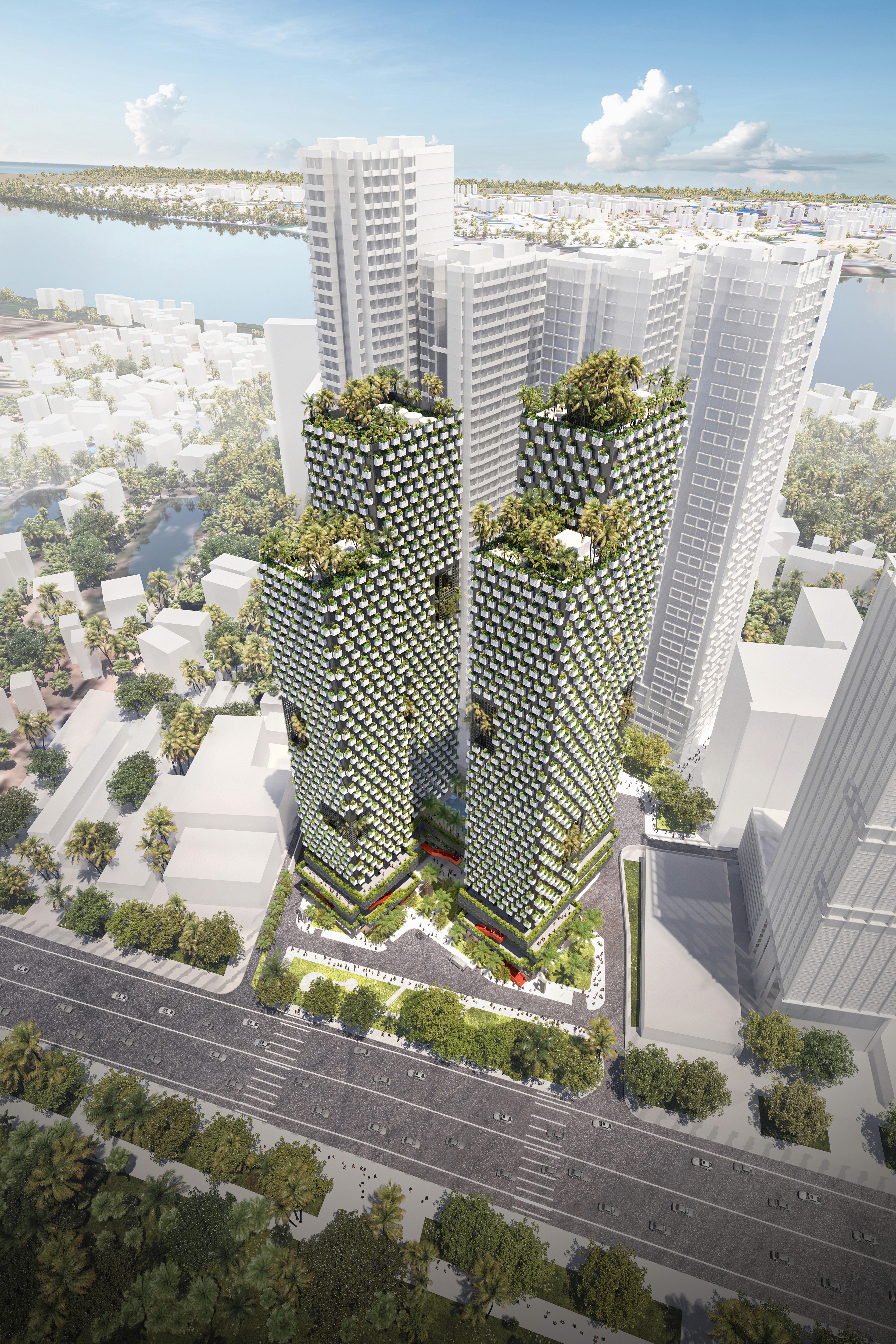
Integrated landscape and activated public realm drive long-term asset value and operational resilience. Phnom Penh Commons.
Phnom Penh is entering a more demanding phase of urban growth. As land values rise and the city densifies, the conventional podium-and-tower model is becoming less effective as a long-term strategy for rental yield, occupancy stability, and asset value. Project performance is now measured by leasing velocity, occupancy stability, and operational efficiency over time, not only by gross floor area. In this market, long-term value depends on rental returns, operating reliability, and the quality of the shared environment.
The next layer of real estate value in Phnom Penh sits in the spaces between buildings, shaded public realm, circulation routes, communal terraces, and social infrastructure that increase dwell time and make a development more useful. This commercial decision directly affects how an asset performs within a competitive market, moving beyond soft design considerations to address the fundamentals of investment return.
Stronger long-term returns depend on how the shared environment is planned, operated, and positioned from day one.
Key takeaways for the Phnom Penh market
Value multiplication: Well-designed public realm can support higher land values, stronger leasing outcomes, and improved residential rents.
Operational efficiency: Climate-responsive master planning reduces cooling loads, lowers maintenance pressure, and improves long-term building performance.
Market differentiation: Mixed-use developments with active ground-floor uses support stronger tenant retention and clearer leasing narratives.
Future-proofing: Projects with strong ESG performance and place identity are more attractive to institutional capital and high-net-worth buyers and investors.
How public realm design boosts real estate value in Phnom Penh
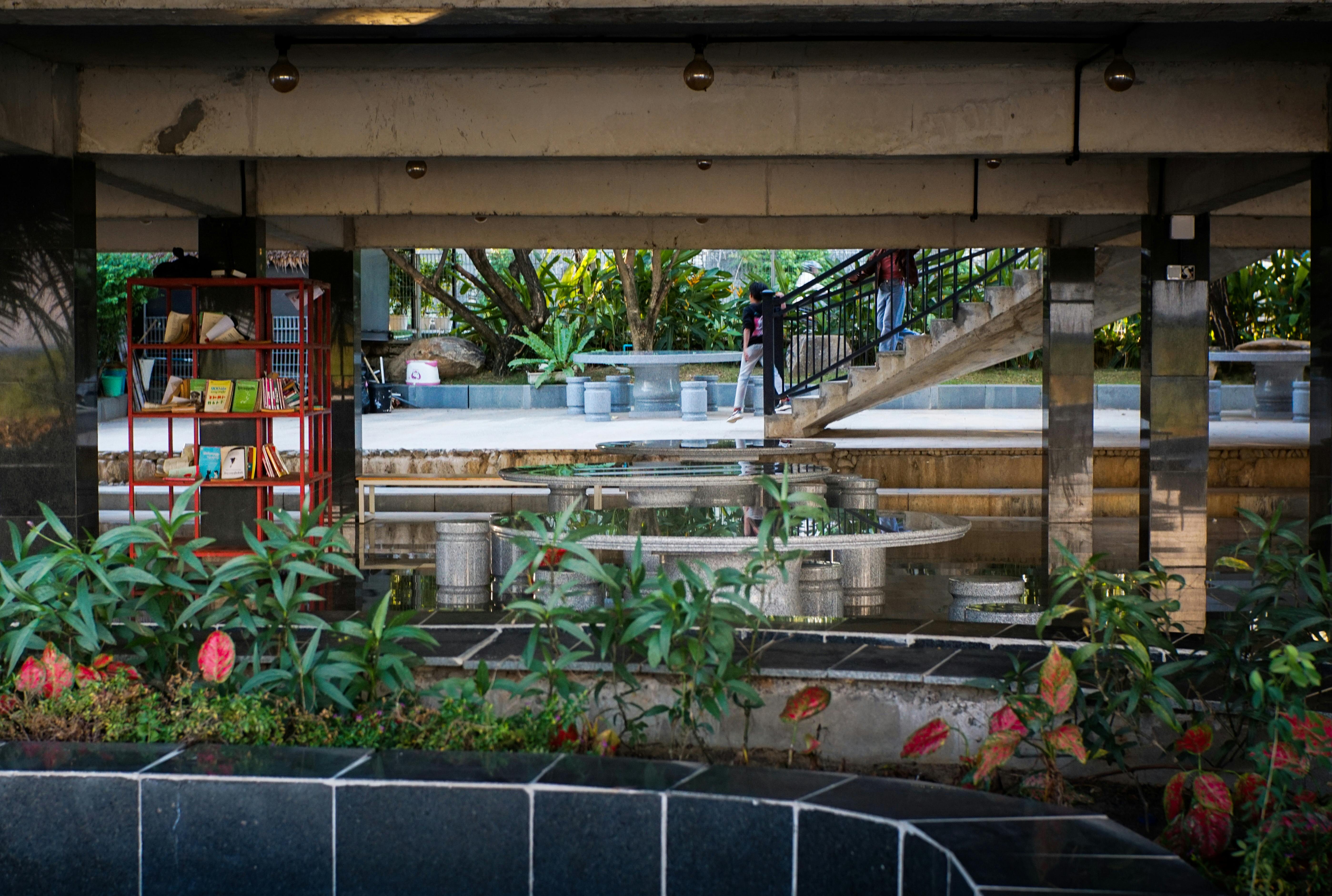
Shaded circulation and social infrastructure improve ground-plane performance and user experience. Outdoor reading corner in Phnom Penh. Photo by Khun Sodara via Pexels.
In much of Phnom Penh, the public realm is still treated as leftover space after parking, circulation, and building footprints are resolved. This approach limits ground-floor performance, weakens the user experience, and misses the pricing uplift that well-designed external environments can support.
The public realm functions as part of the asset offering. It shapes first impressions, footfall quality, and the perceived value of the development. This is critical in Phnom Penh, where heat, traffic, and fragmented pedestrian conditions influence how people experience the city. A development that provides shaded circulation, clear wayfinding, and active ground-floor uses can achieve stronger leasing performance and more sustained footfall.
Research from Brookings and Reimagining the Civic Commons supports the relationship between quality public space, private investment, and property value uplift. When shared environments are planned as part of the asset strategy, they strengthen both market appeal and long-term performance.
Why Phnom Penh developers are moving beyond the podium and tower model
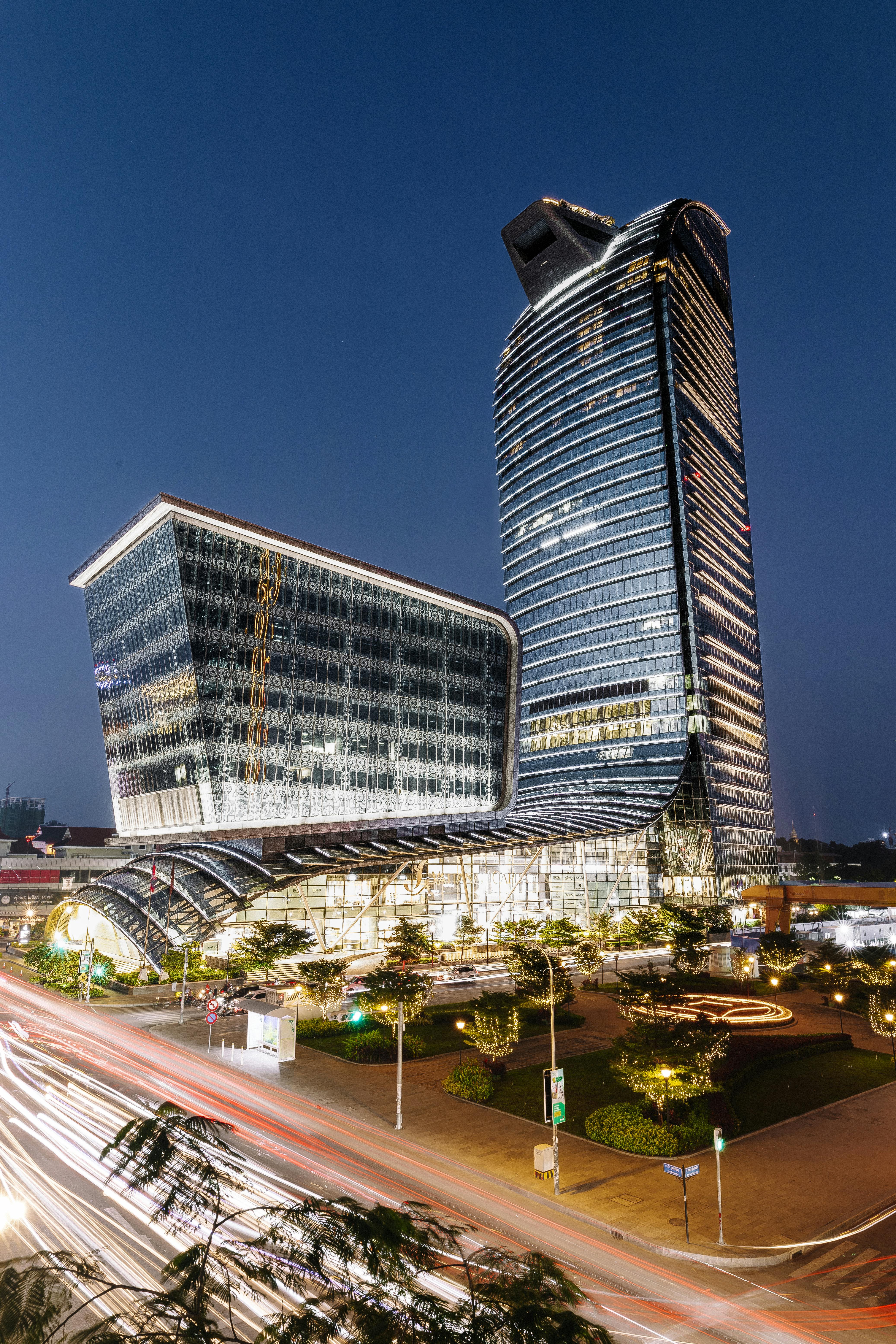
Podium-tower typology. Vattanac Capital. Photo by Zion via Pexels.
The podium and tower model has defined much of Cambodia’s recent urban growth. While efficient for construction, it often underperforms at street level, where leasing visibility and user experience are won or lost. Blank edges, car-dominated frontages, and disconnected amenity zones reduce urban energy and weaken the identity of the project.
This is where many developments lose value. Ground floors that do not attract dwell time are harder to lease, activate, or reposition over time. Retail mixes become less stable, and public-facing uses struggle to build momentum. A more resilient approach structures the development as an ecosystem where public, semi-public, and private realms are intentionally organized to remain active across more hours of the day.
Integrating retail, work, and living functions around a clear social spine drives stronger footfall, better tenant mix, and a clearer leasing story.
Climate-responsive master planning for Phnom Penh real estate

Climate-responsive planning integrates shading, planting, and ventilation to support comfort, usability, and operational efficiency. Generated with Nano Banana Pro.
In Cambodia, climate is not a secondary design factor. It is a primary driver of planning, comfort, and operating cost. A public plaza that works in a temperate market can fail in Phnom Penh if it does not offer shade, airflow, and protected movement. Climate-responsive master planning must begin with microclimate: building massing, orientation, planting, and ventilation corridors.
The key question is simple. Can residents, office users, and visitors move through the development comfortably throughout the day? If the answer is no, then the public realm is underperforming and the commercial logic beneath it is weakened.
Climate-responsive planning also improves operational outcomes. Lower solar gain reduces cooling pressure, while shaded circulation improves comfort, supports ground-floor activity, and reduces operational stress. In Phnom Penh, shade and breeze are not amenities. They are essential infrastructure.
Phnom Penh Commons case study: mixed-use master planning with lifestyle amenities
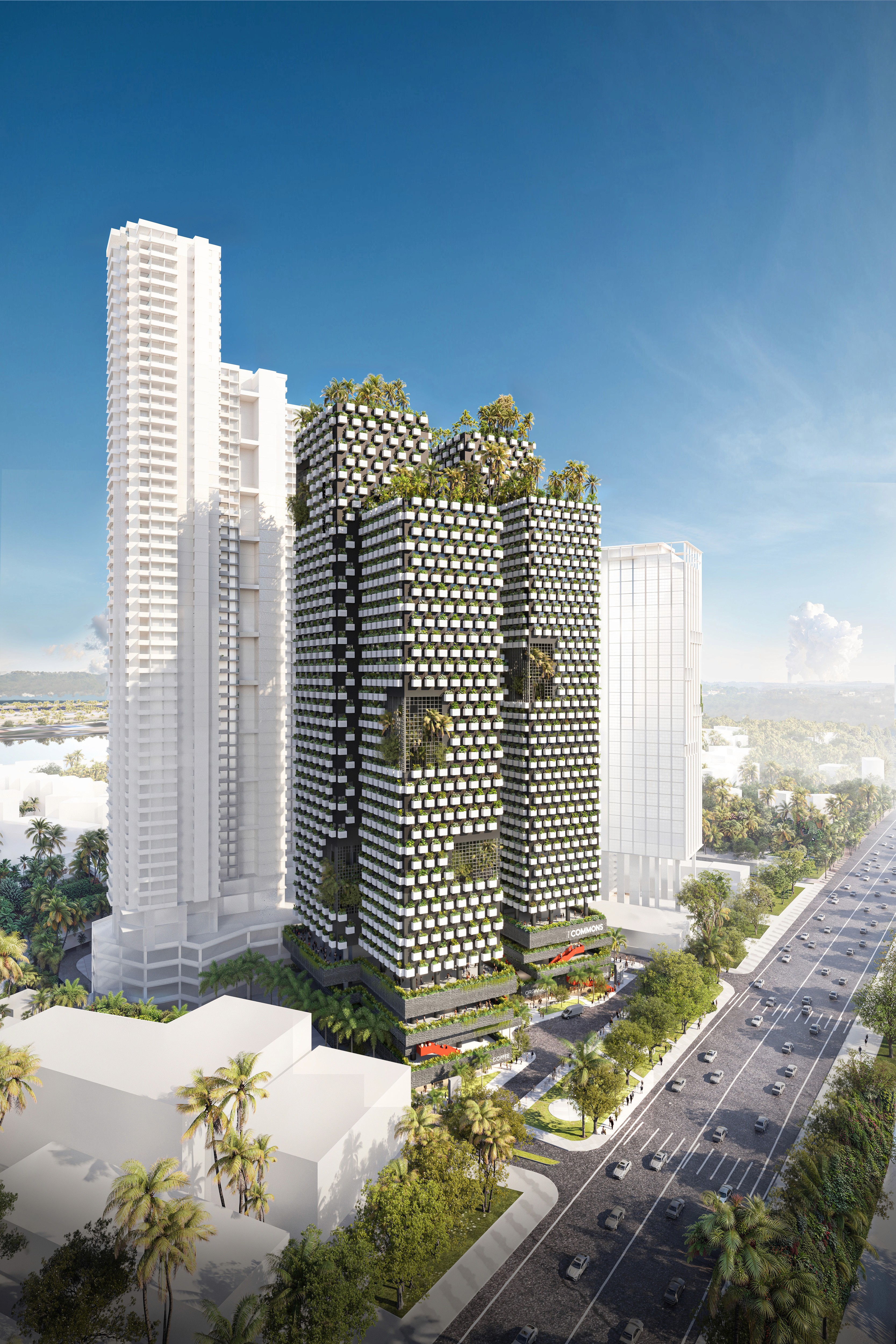
Layered mixed-use planning transforms the podium into an active social spine, supporting 24/7 activity and long-term asset performance. Phnom Penh Commons.
Phnom Penh Commons shows how performance-led master planning can create a more usable, resilient, and commercially legible mixed-use development. The scheme is organized as a live, work, and play environment shaped around community life, operational clarity, and environmental performance, with each layer supporting the others.
The project integrates a traditional podium mix with a broader ecosystem approach. While retail and amenity spaces occupy the podium level, the design strengthens this base with lifestyle amenities such as urban farming terraces, sports facilities, and cultural spaces. This layered approach transforms the podium from a static retail base into an active social spine that supports a 24/7 mixed-use environment.

Social infrastructure supports tenant retention by increasing daily use across age groups and routines.
1. Community: Social infrastructure as a retention tool
The project is designed to draw people into shared parts of the development. The amenity strategy includes urban farming terraces, sports facilities, and exhibition spaces. These social anchors increase the usefulness of the development across age groups and daily routines, supporting user wellbeing, strengthening identity, and improving long-term tenant retention.
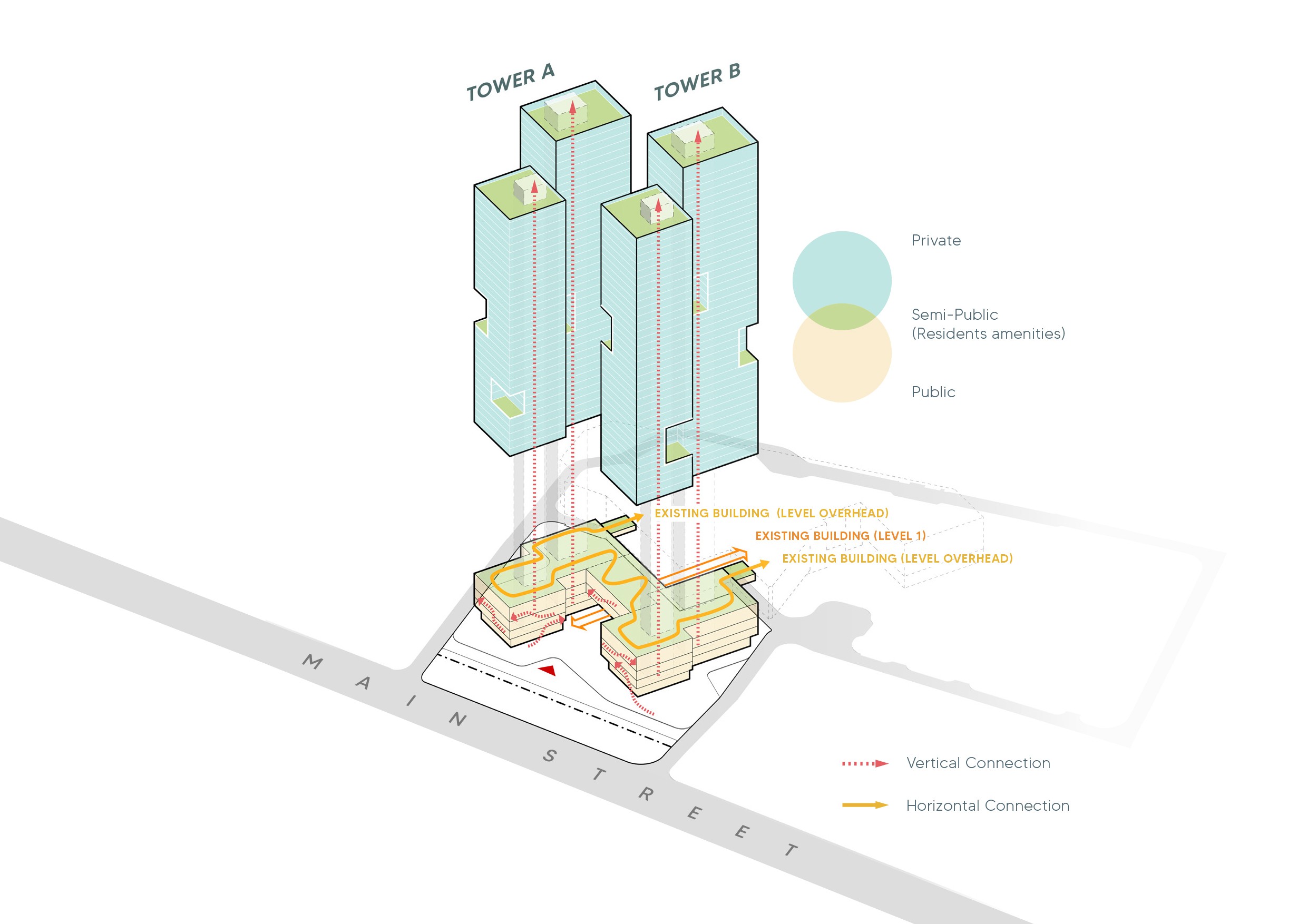
Clear zoning separates public, semi-private, and private uses, improving access control, operational efficiency, and user mix resilience.
2. Functionality: Zoning for operational clarity
Residential, co-working, and retail functions are integrated within a framework that separates public, semi-private, and private zones with discipline. This separation reduces user conflict, improves access control, and makes day-to-day management more efficient. Clear zoning supports a wider and more resilient user mix.
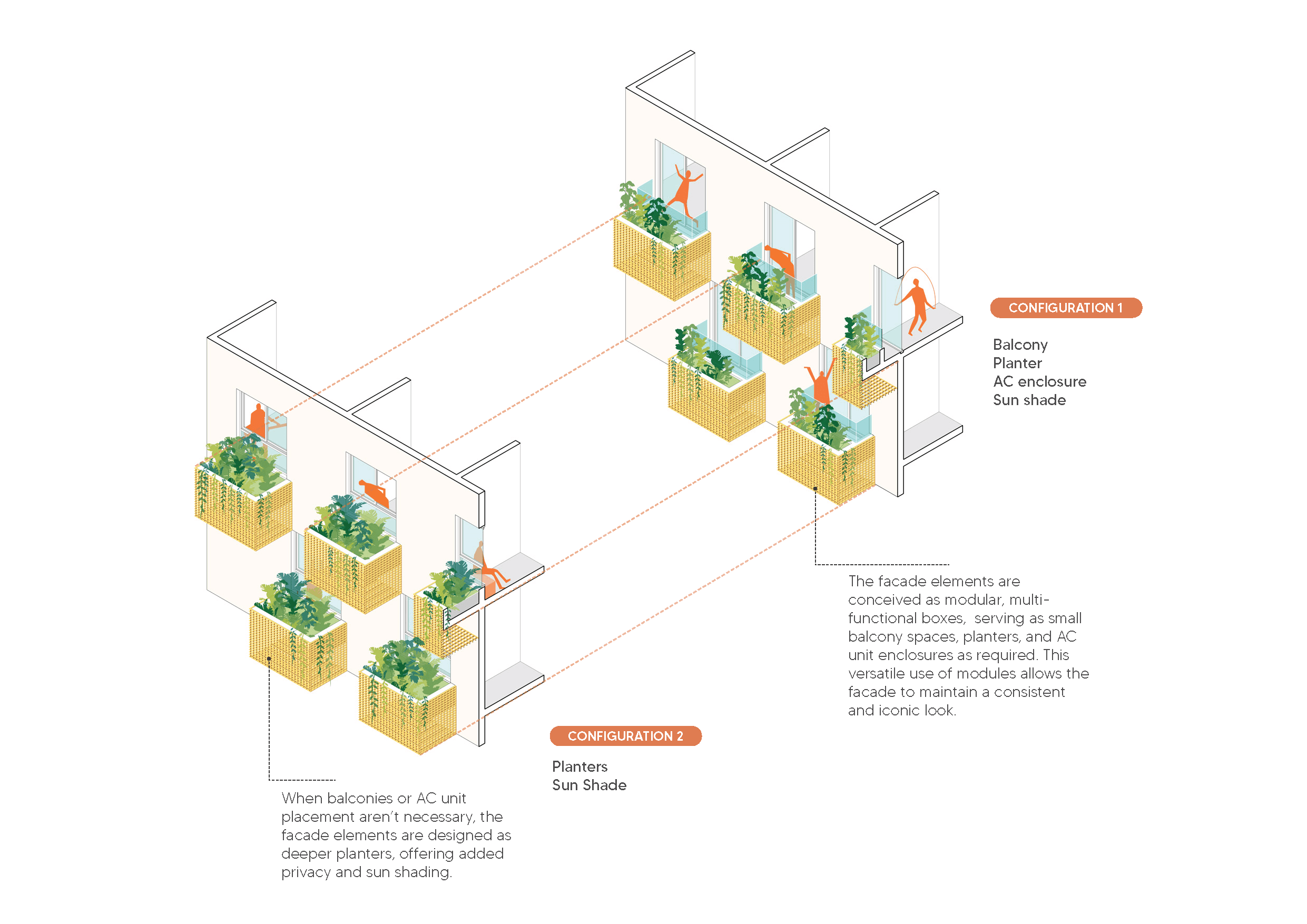
Modular living façade integrates planting and infrastructure to reduce heat gain, improve privacy, and support long-term operational efficiency.
3. Sustainability: The living façade as an operational system
Sustainability is embedded in the architecture through solar energy, water recycling, and EV charging infrastructure. A primary innovation is the rethink of the façade edge. Traditional balconies are reworked into modular elements with integrated planting and infrastructure screening.
This approach supports performance on several levels:
Energy efficiency: Planting reduces direct solar exposure and lowers heat gain on the envelope.
Privacy: Integrated greenery creates separation between units without compromising natural light.
Operational logic: Outdoor units and servicing elements are screened, supporting maintenance and visual order.
Resource circularity: Harvested rainwater sustains planting across seasons.
This is where sustainability becomes commercially visible, improving façade longevity and strengthening the value narrative for buyers, tenants, and investment stakeholders.
Why place identity matters for Phnom Penh real estate developments
As competition increases, a project’s address is no longer enough to secure market attention. Place identity affects how a development is perceived, marketed, and recommended. When a scheme has a distinctive public realm and a coherent material palette, it becomes easier to market, lease, and recommend. Sales teams are selling a recognizable place experience that stands out in the market.
Regional investors, international tenants, and high-net-worth buyers are comparing Cambodian assets against broader benchmarks. Developments that communicate environmental responsibility, operational competence, and cultural relevance are better placed to attract that attention. Place identity is not separate from commercial strategy. It is part of how a project earns trust and maintains distinction.
This is where brand narrative and business performance converge. A development with a clear identity is easier to lease, easier to market, and easier to defend over time.
The ROI of strategic urban design for Phnom Penh property developers
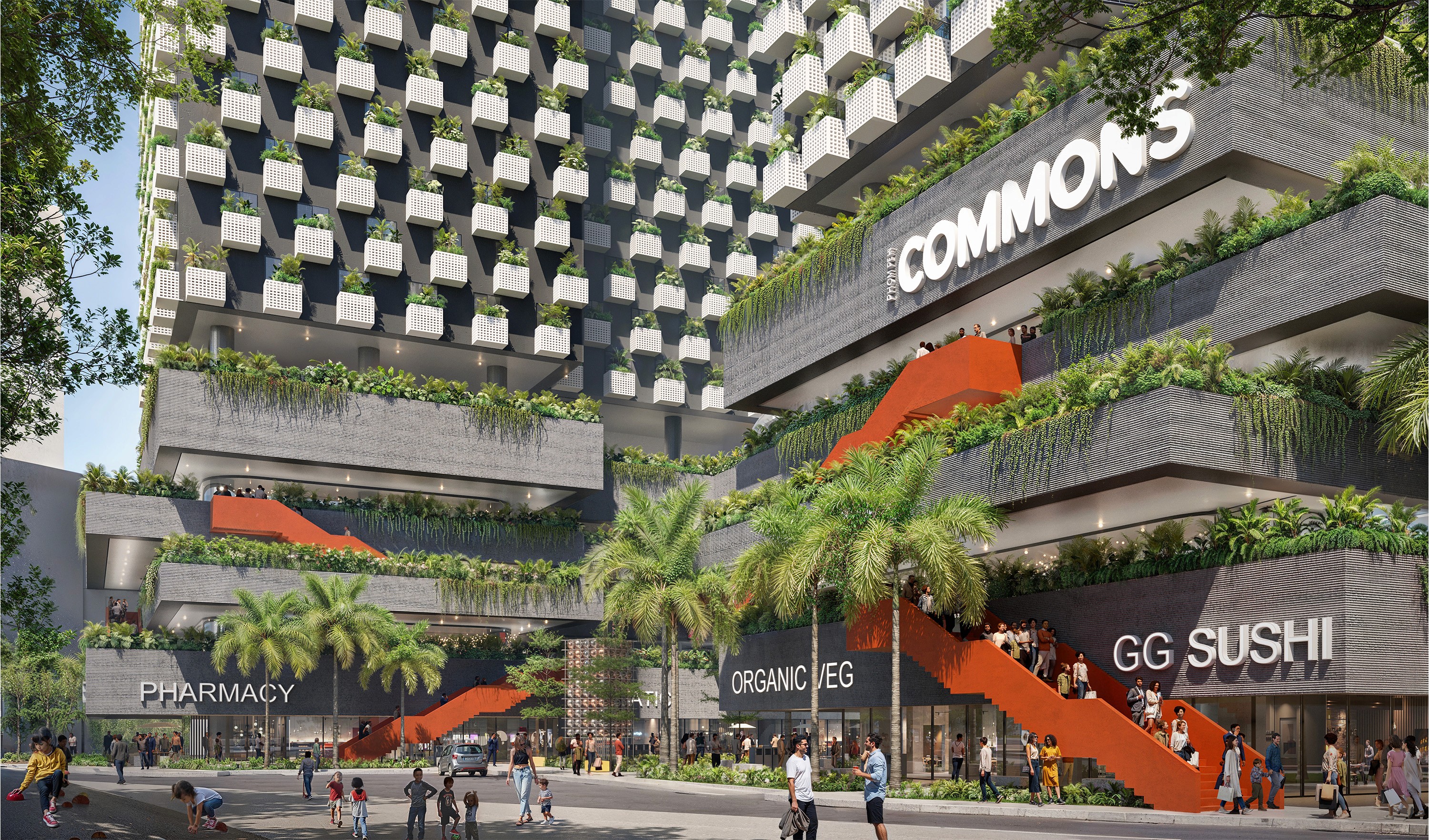
Integrated public realm and climate design drive dwell time, rental stability, and asset value.
Integrating public realm, climate response, and social infrastructure into the core development model aligns civic contribution with commercial performance and supports dwell time, stable rental yields, and operational resilience.
In Phnom Penh’s next phase of growth, the developments that endure will be defined not only by their physical structures, but by how effectively they organize movement, climate, and daily human experience. The shared environment functions as performance space, driving movement, comfort, and activation across the site. Mixed-use planning achieves its full potential when uses are integrated into a coherent system that supports operators, tenants, and visitors over the long term.
For developers seeking to improve asset performance through master planning and high-performance design, The Room Architecture and Design can help align the commercial, operational, and user outcomes of your next project.
Phnom Penh is entering a more demanding phase of urban growth. As land values rise and the city densifies, the conventional podium-and-tower model is becoming less effective as a long-term strategy for rental yield, occupancy stability, and asset value. Project performance is now measured by leasing velocity, occupancy stability, and operational efficiency over time, not only by gross floor area. In this market, long-term value depends on rental returns, operating reliability, and the quality of the shared environment.
The next layer of real estate value in Phnom Penh sits in the spaces between buildings, shaded public realm, circulation routes, communal terraces, and social infrastructure that increase dwell time and make a development more useful. This commercial decision directly affects how an asset performs within a competitive market, moving beyond soft design considerations to address the fundamentals of investment return.
Stronger long-term returns depend on how the shared environment is planned, operated, and positioned from day one.
Key takeaways for the Phnom Penh market
Value multiplication: Well-designed public realm can support higher land values, stronger leasing outcomes, and improved residential rents.
Operational efficiency: Climate-responsive master planning reduces cooling loads, lowers maintenance pressure, and improves long-term building performance.
Market differentiation: Mixed-use developments with active ground-floor uses support stronger tenant retention and clearer leasing narratives.
Future-proofing: Projects with strong ESG performance and place identity are more attractive to institutional capital and high-net-worth buyers and investors.
How public realm design boosts real estate value in Phnom Penh
Shaded circulation and social infrastructure improve ground-plane performance and user experience. Outdoor reading corner in Phnom Penh. Photo by Khun Sodara via Pexels.
In much of Phnom Penh, the public realm is still treated as leftover space after parking, circulation, and building footprints are resolved. This approach limits ground-floor performance, weakens the user experience, and misses the pricing uplift that well-designed external environments can support.
The public realm functions as part of the asset offering. It shapes first impressions, footfall quality, and the perceived value of the development. This is critical in Phnom Penh, where heat, traffic, and fragmented pedestrian conditions influence how people experience the city. A development that provides shaded circulation, clear wayfinding, and active ground-floor uses can achieve stronger leasing performance and more sustained footfall.
Research from Brookings and Reimagining the Civic Commons supports the relationship between quality public space, private investment, and property value uplift. When shared environments are planned as part of the asset strategy, they strengthen both market appeal and long-term performance.
Why Phnom Penh developers are moving beyond the podium and tower model
Podium-tower typology. Vattanac Capital. Photo by Zion via Pexels.
The podium and tower model has defined much of Cambodia’s recent urban growth. While efficient for construction, it often underperforms at street level, where leasing visibility and user experience are won or lost. Blank edges, car-dominated frontages, and disconnected amenity zones reduce urban energy and weaken the identity of the project.
This is where many developments lose value. Ground floors that do not attract dwell time are harder to lease, activate, or reposition over time. Retail mixes become less stable, and public-facing uses struggle to build momentum. A more resilient approach structures the development as an ecosystem where public, semi-public, and private realms are intentionally organized to remain active across more hours of the day.
Integrating retail, work, and living functions around a clear social spine drives stronger footfall, better tenant mix, and a clearer leasing story.
Climate-responsive master planning for Phnom Penh real estate
Climate-responsive planning integrates shading, planting, and ventilation to support comfort, usability, and operational efficiency. Generated with Nano Banana Pro.
In Cambodia, climate is not a secondary design factor. It is a primary driver of planning, comfort, and operating cost. A public plaza that works in a temperate market can fail in Phnom Penh if it does not offer shade, airflow, and protected movement. Climate-responsive master planning must begin with microclimate: building massing, orientation, planting, and ventilation corridors.
The key question is simple. Can residents, office users, and visitors move through the development comfortably throughout the day? If the answer is no, then the public realm is underperforming and the commercial logic beneath it is weakened.
Climate-responsive planning also improves operational outcomes. Lower solar gain reduces cooling pressure, while shaded circulation improves comfort, supports ground-floor activity, and reduces operational stress. In Phnom Penh, shade and breeze are not amenities. They are essential infrastructure.
Phnom Penh Commons case study: mixed-use master planning with lifestyle amenities
Layered mixed-use planning transforms the podium into an active social spine, supporting 24/7 activity and long-term asset performance. Phnom Penh Commons.
Phnom Penh Commons shows how performance-led master planning can create a more usable, resilient, and commercially legible mixed-use development. The scheme is organized as a live, work, and play environment shaped around community life, operational clarity, and environmental performance, with each layer supporting the others.
The project integrates a traditional podium mix with a broader ecosystem approach. While retail and amenity spaces occupy the podium level, the design strengthens this base with lifestyle amenities such as urban farming terraces, sports facilities, and cultural spaces. This layered approach transforms the podium from a static retail base into an active social spine that supports a 24/7 mixed-use environment.
Social infrastructure supports tenant retention by increasing daily use across age groups and routines.
1. Community: Social infrastructure as a retention tool
The project is designed to draw people into shared parts of the development. The amenity strategy includes urban farming terraces, sports facilities, and exhibition spaces. These social anchors increase the usefulness of the development across age groups and daily routines, supporting user wellbeing, strengthening identity, and improving long-term tenant retention.
Clear zoning separates public, semi-private, and private uses, improving access control, operational efficiency, and user mix resilience.
2. Functionality: Zoning for operational clarity
Residential, co-working, and retail functions are integrated within a framework that separates public, semi-private, and private zones with discipline. This separation reduces user conflict, improves access control, and makes day-to-day management more efficient. Clear zoning supports a wider and more resilient user mix.
Modular living façade integrates planting and infrastructure to reduce heat gain, improve privacy, and support long-term operational efficiency.
3. Sustainability: The living façade as an operational system
Sustainability is embedded in the architecture through solar energy, water recycling, and EV charging infrastructure. A primary innovation is the rethink of the façade edge. Traditional balconies are reworked into modular elements with integrated planting and infrastructure screening.
This approach supports performance on several levels:
Energy efficiency: Planting reduces direct solar exposure and lowers heat gain on the envelope.
Privacy: Integrated greenery creates separation between units without compromising natural light.
Operational logic: Outdoor units and servicing elements are screened, supporting maintenance and visual order.
Resource circularity: Harvested rainwater sustains planting across seasons.
This is where sustainability becomes commercially visible, improving façade longevity and strengthening the value narrative for buyers, tenants, and investment stakeholders.
Why place identity matters for Phnom Penh real estate developments
As competition increases, a project’s address is no longer enough to secure market attention. Place identity affects how a development is perceived, marketed, and recommended. When a scheme has a distinctive public realm and a coherent material palette, it becomes easier to market, lease, and recommend. Sales teams are selling a recognizable place experience that stands out in the market.
Regional investors, international tenants, and high-net-worth buyers are comparing Cambodian assets against broader benchmarks. Developments that communicate environmental responsibility, operational competence, and cultural relevance are better placed to attract that attention. Place identity is not separate from commercial strategy. It is part of how a project earns trust and maintains distinction.
This is where brand narrative and business performance converge. A development with a clear identity is easier to lease, easier to market, and easier to defend over time.
The ROI of strategic urban design for Phnom Penh property developers
Integrated public realm and climate design drive dwell time, rental stability, and asset value.
Integrating public realm, climate response, and social infrastructure into the core development model aligns civic contribution with commercial performance and supports dwell time, stable rental yields, and operational resilience.
In Phnom Penh’s next phase of growth, the developments that endure will be defined not only by their physical structures, but by how effectively they organize movement, climate, and daily human experience. The shared environment functions as performance space, driving movement, comfort, and activation across the site. Mixed-use planning achieves its full potential when uses are integrated into a coherent system that supports operators, tenants, and visitors over the long term.
For developers seeking to improve asset performance through master planning and high-performance design, The Room Architecture and Design can help align the commercial, operational, and user outcomes of your next project.
Phnom Penh is entering a more demanding phase of urban growth. As land values rise and the city densifies, the conventional podium-and-tower model is becoming less effective as a long-term strategy for rental yield, occupancy stability, and asset value. Project performance is now measured by leasing velocity, occupancy stability, and operational efficiency over time, not only by gross floor area. In this market, long-term value depends on rental returns, operating reliability, and the quality of the shared environment.
The next layer of real estate value in Phnom Penh sits in the spaces between buildings, shaded public realm, circulation routes, communal terraces, and social infrastructure that increase dwell time and make a development more useful. This commercial decision directly affects how an asset performs within a competitive market, moving beyond soft design considerations to address the fundamentals of investment return.
Stronger long-term returns depend on how the shared environment is planned, operated, and positioned from day one.
Key takeaways for the Phnom Penh market
Value multiplication: Well-designed public realm can support higher land values, stronger leasing outcomes, and improved residential rents.
Operational efficiency: Climate-responsive master planning reduces cooling loads, lowers maintenance pressure, and improves long-term building performance.
Market differentiation: Mixed-use developments with active ground-floor uses support stronger tenant retention and clearer leasing narratives.
Future-proofing: Projects with strong ESG performance and place identity are more attractive to institutional capital and high-net-worth buyers and investors.
How public realm design boosts real estate value in Phnom Penh
Shaded circulation and social infrastructure improve ground-plane performance and user experience. Outdoor reading corner in Phnom Penh. Photo by Khun Sodara via Pexels.
In much of Phnom Penh, the public realm is still treated as leftover space after parking, circulation, and building footprints are resolved. This approach limits ground-floor performance, weakens the user experience, and misses the pricing uplift that well-designed external environments can support.
The public realm functions as part of the asset offering. It shapes first impressions, footfall quality, and the perceived value of the development. This is critical in Phnom Penh, where heat, traffic, and fragmented pedestrian conditions influence how people experience the city. A development that provides shaded circulation, clear wayfinding, and active ground-floor uses can achieve stronger leasing performance and more sustained footfall.
Research from Brookings and Reimagining the Civic Commons supports the relationship between quality public space, private investment, and property value uplift. When shared environments are planned as part of the asset strategy, they strengthen both market appeal and long-term performance.
Why Phnom Penh developers are moving beyond the podium and tower model
Podium-tower typology. Vattanac Capital. Photo by Zion via Pexels.
The podium and tower model has defined much of Cambodia’s recent urban growth. While efficient for construction, it often underperforms at street level, where leasing visibility and user experience are won or lost. Blank edges, car-dominated frontages, and disconnected amenity zones reduce urban energy and weaken the identity of the project.
This is where many developments lose value. Ground floors that do not attract dwell time are harder to lease, activate, or reposition over time. Retail mixes become less stable, and public-facing uses struggle to build momentum. A more resilient approach structures the development as an ecosystem where public, semi-public, and private realms are intentionally organized to remain active across more hours of the day.
Integrating retail, work, and living functions around a clear social spine drives stronger footfall, better tenant mix, and a clearer leasing story.
Climate-responsive master planning for Phnom Penh real estate
Climate-responsive planning integrates shading, planting, and ventilation to support comfort, usability, and operational efficiency. Generated with Nano Banana Pro.
In Cambodia, climate is not a secondary design factor. It is a primary driver of planning, comfort, and operating cost. A public plaza that works in a temperate market can fail in Phnom Penh if it does not offer shade, airflow, and protected movement. Climate-responsive master planning must begin with microclimate: building massing, orientation, planting, and ventilation corridors.
The key question is simple. Can residents, office users, and visitors move through the development comfortably throughout the day? If the answer is no, then the public realm is underperforming and the commercial logic beneath it is weakened.
Climate-responsive planning also improves operational outcomes. Lower solar gain reduces cooling pressure, while shaded circulation improves comfort, supports ground-floor activity, and reduces operational stress. In Phnom Penh, shade and breeze are not amenities. They are essential infrastructure.
Phnom Penh Commons case study: mixed-use master planning with lifestyle amenities
Layered mixed-use planning transforms the podium into an active social spine, supporting 24/7 activity and long-term asset performance. Phnom Penh Commons.
Phnom Penh Commons shows how performance-led master planning can create a more usable, resilient, and commercially legible mixed-use development. The scheme is organized as a live, work, and play environment shaped around community life, operational clarity, and environmental performance, with each layer supporting the others.
The project integrates a traditional podium mix with a broader ecosystem approach. While retail and amenity spaces occupy the podium level, the design strengthens this base with lifestyle amenities such as urban farming terraces, sports facilities, and cultural spaces. This layered approach transforms the podium from a static retail base into an active social spine that supports a 24/7 mixed-use environment.
Social infrastructure supports tenant retention by increasing daily use across age groups and routines.
1. Community: Social infrastructure as a retention tool
The project is designed to draw people into shared parts of the development. The amenity strategy includes urban farming terraces, sports facilities, and exhibition spaces. These social anchors increase the usefulness of the development across age groups and daily routines, supporting user wellbeing, strengthening identity, and improving long-term tenant retention.
Clear zoning separates public, semi-private, and private uses, improving access control, operational efficiency, and user mix resilience.
2. Functionality: Zoning for operational clarity
Residential, co-working, and retail functions are integrated within a framework that separates public, semi-private, and private zones with discipline. This separation reduces user conflict, improves access control, and makes day-to-day management more efficient. Clear zoning supports a wider and more resilient user mix.
Modular living façade integrates planting and infrastructure to reduce heat gain, improve privacy, and support long-term operational efficiency.
3. Sustainability: The living façade as an operational system
Sustainability is embedded in the architecture through solar energy, water recycling, and EV charging infrastructure. A primary innovation is the rethink of the façade edge. Traditional balconies are reworked into modular elements with integrated planting and infrastructure screening.
This approach supports performance on several levels:
Energy efficiency: Planting reduces direct solar exposure and lowers heat gain on the envelope.
Privacy: Integrated greenery creates separation between units without compromising natural light.
Operational logic: Outdoor units and servicing elements are screened, supporting maintenance and visual order.
Resource circularity: Harvested rainwater sustains planting across seasons.
This is where sustainability becomes commercially visible, improving façade longevity and strengthening the value narrative for buyers, tenants, and investment stakeholders.
Why place identity matters for Phnom Penh real estate developments
As competition increases, a project’s address is no longer enough to secure market attention. Place identity affects how a development is perceived, marketed, and recommended. When a scheme has a distinctive public realm and a coherent material palette, it becomes easier to market, lease, and recommend. Sales teams are selling a recognizable place experience that stands out in the market.
Regional investors, international tenants, and high-net-worth buyers are comparing Cambodian assets against broader benchmarks. Developments that communicate environmental responsibility, operational competence, and cultural relevance are better placed to attract that attention. Place identity is not separate from commercial strategy. It is part of how a project earns trust and maintains distinction.
This is where brand narrative and business performance converge. A development with a clear identity is easier to lease, easier to market, and easier to defend over time.
The ROI of strategic urban design for Phnom Penh property developers
Integrated public realm and climate design drive dwell time, rental stability, and asset value.
Integrating public realm, climate response, and social infrastructure into the core development model aligns civic contribution with commercial performance and supports dwell time, stable rental yields, and operational resilience.
In Phnom Penh’s next phase of growth, the developments that endure will be defined not only by their physical structures, but by how effectively they organize movement, climate, and daily human experience. The shared environment functions as performance space, driving movement, comfort, and activation across the site. Mixed-use planning achieves its full potential when uses are integrated into a coherent system that supports operators, tenants, and visitors over the long term.
For developers seeking to improve asset performance through master planning and high-performance design, The Room Architecture and Design can help align the commercial, operational, and user outcomes of your next project.