The Waypoint
The Waypoint
Kep, 2020

The Waypoint is a residential project in Kep province, situated between the heritage sites and the seascape. The architecture is positioned within the coastal landscape to serve as a waypoint and a landmark along the shore. Massing and orientation are shaped by views of Kep beach, the sea, and the surrounding hills.
The design utilizes a sloping green roof formed by ascending benches that create a platform for outdoor use. At ground level, south-facing folding glass doors connect the interior to the outdoors, while a master bedroom circular window frames views of the garden and mountains. The layout is inspired by fishing culture, with two volumes arranged like boats beside a wooden dock. A pier-like walkway leads from the road, across a swimming pool, and into the foyer.
The Waypoint is a residential project in Kep province, situated between the heritage sites and the seascape. The architecture is positioned within the coastal landscape to serve as a waypoint and a landmark along the shore. Massing and orientation are shaped by views of Kep beach, the sea, and the surrounding hills.
The design utilizes a sloping green roof formed by ascending benches that create a platform for outdoor use. At ground level, south-facing folding glass doors connect the interior to the outdoors, while a master bedroom circular window frames views of the garden and mountains. The layout is inspired by fishing culture, with two volumes arranged like boats beside a wooden dock. A pier-like walkway leads from the road, across a swimming pool, and into the foyer.
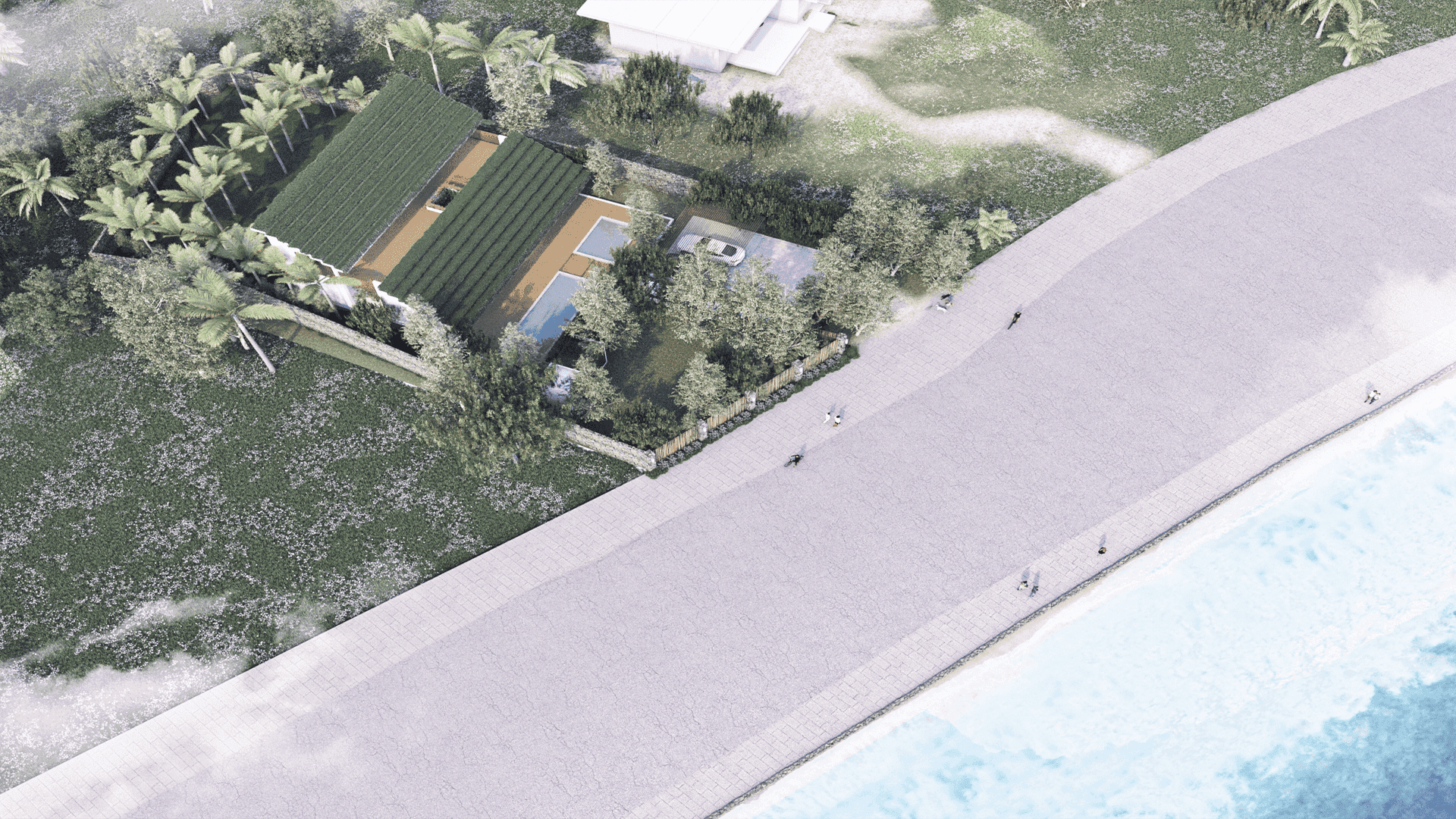
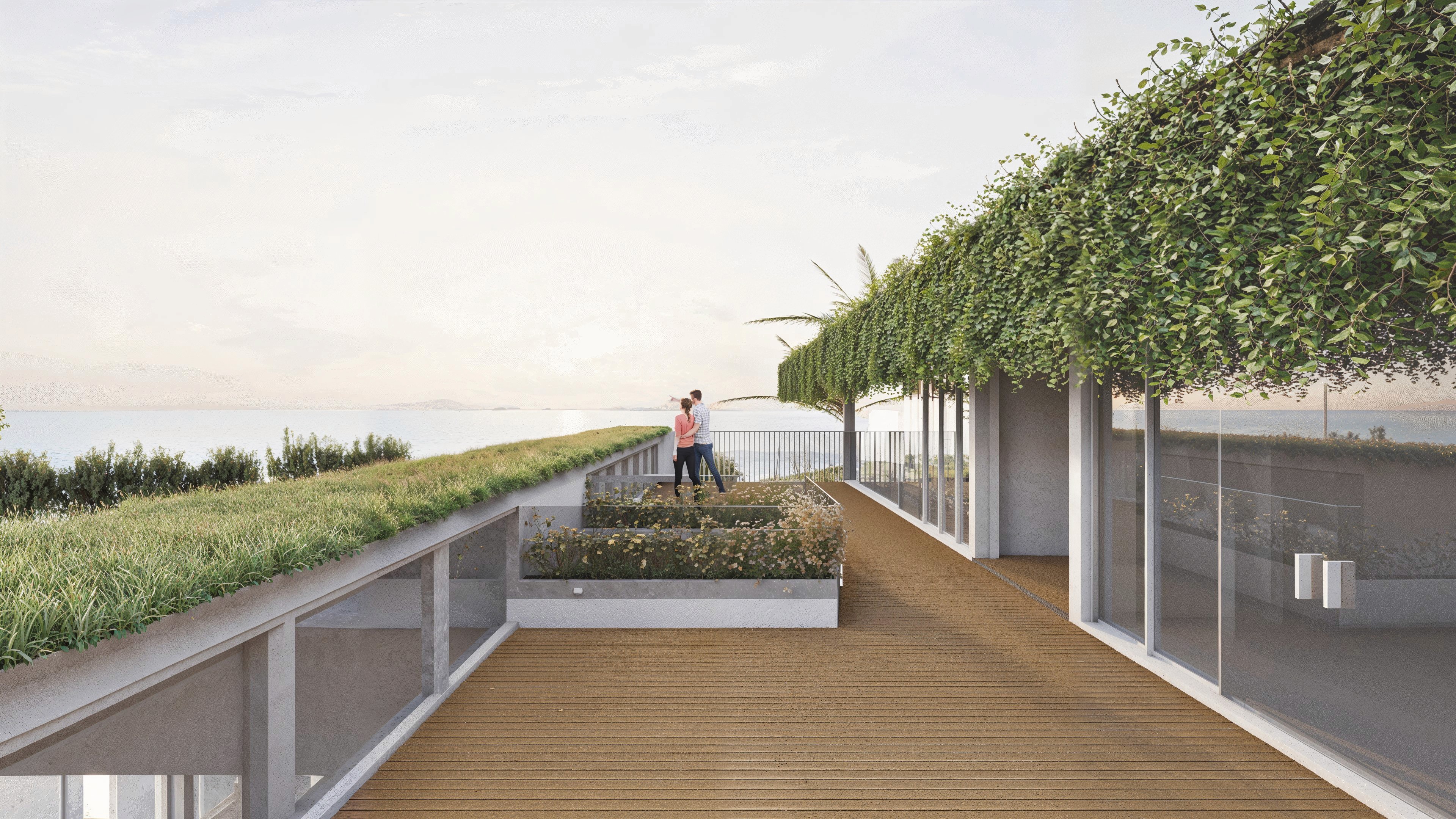
Spatial organization divides the property into public and private zones through a central garden, a hallway, and a first-floor terrace. A green courtyard and staircase split the house vertically, while an open central atrium maintains connectivity and introduces natural light throughout the spaces.
Functionality is integrated into the structural features. The green roof manages rainwater and contributes to thermal control, while tall trees provide privacy and facilitate the flow of sea breezes. Ventilation and brightness are further improved through high ceilings and skylights, with all main rooms oriented toward the sea.

Spatial organization divides the property into public and private zones through a central garden, a hallway, and a first-floor terrace. A green courtyard and staircase split the house vertically, while an open central atrium maintains connectivity and introduces natural light throughout the spaces.
Functionality is integrated into the structural features. The green roof manages rainwater and contributes to thermal control, while tall trees provide privacy and facilitate the flow of sea breezes. Ventilation and brightness are further improved through high ceilings and skylights, with all main rooms oriented toward the sea.