Dak Dam Market
Dak Dam Market
Mondulkiri, 2022
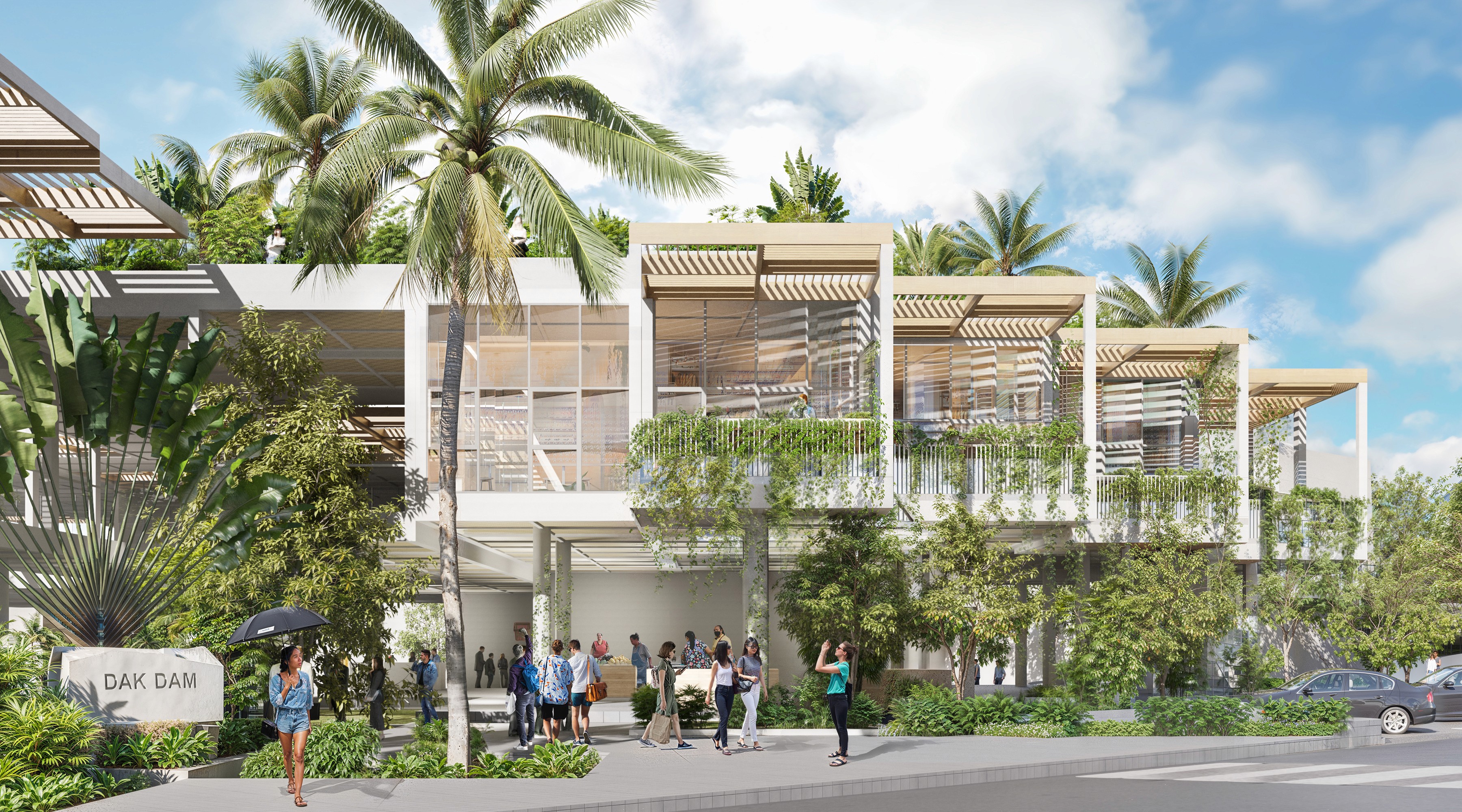
Dak Dam Market is a commercial development in Mondulkiri, Cambodia, designed to support regional trade within a clear and efficient spatial framework. The project organizes flexible vendor stalls for food and artisan goods within a legible circulation layout that balances daily local use with seasonal tourist activity. By integrating soft natural light throughout the interior, the design improves product visibility while reducing reliance on artificial lighting during peak hours.
Prioritizing operational efficiency allows for the integration of multiple passive design strategies. Deep shading and cross-ventilation reduce energy demand and improve thermal comfort for vendors and visitors, while a modular system supports phased expansion. Such structural flexibility provides a repeatable model that can be adapted to other provincial contexts as local economic requirements evolve.
Dak Dam Market is a commercial development in Mondulkiri, Cambodia, designed to support regional trade within a clear and efficient spatial framework. The project organizes flexible vendor stalls for food and artisan goods within a legible circulation layout that balances daily local use with seasonal tourist activity. By integrating soft natural light throughout the interior, the design improves product visibility while reducing reliance on artificial lighting during peak hours.
Prioritizing operational efficiency allows for the integration of multiple passive design strategies. Deep shading and cross-ventilation reduce energy demand and improve thermal comfort for vendors and visitors, while a modular system supports phased expansion. Such structural flexibility provides a repeatable model that can be adapted to other provincial contexts as local economic requirements evolve.

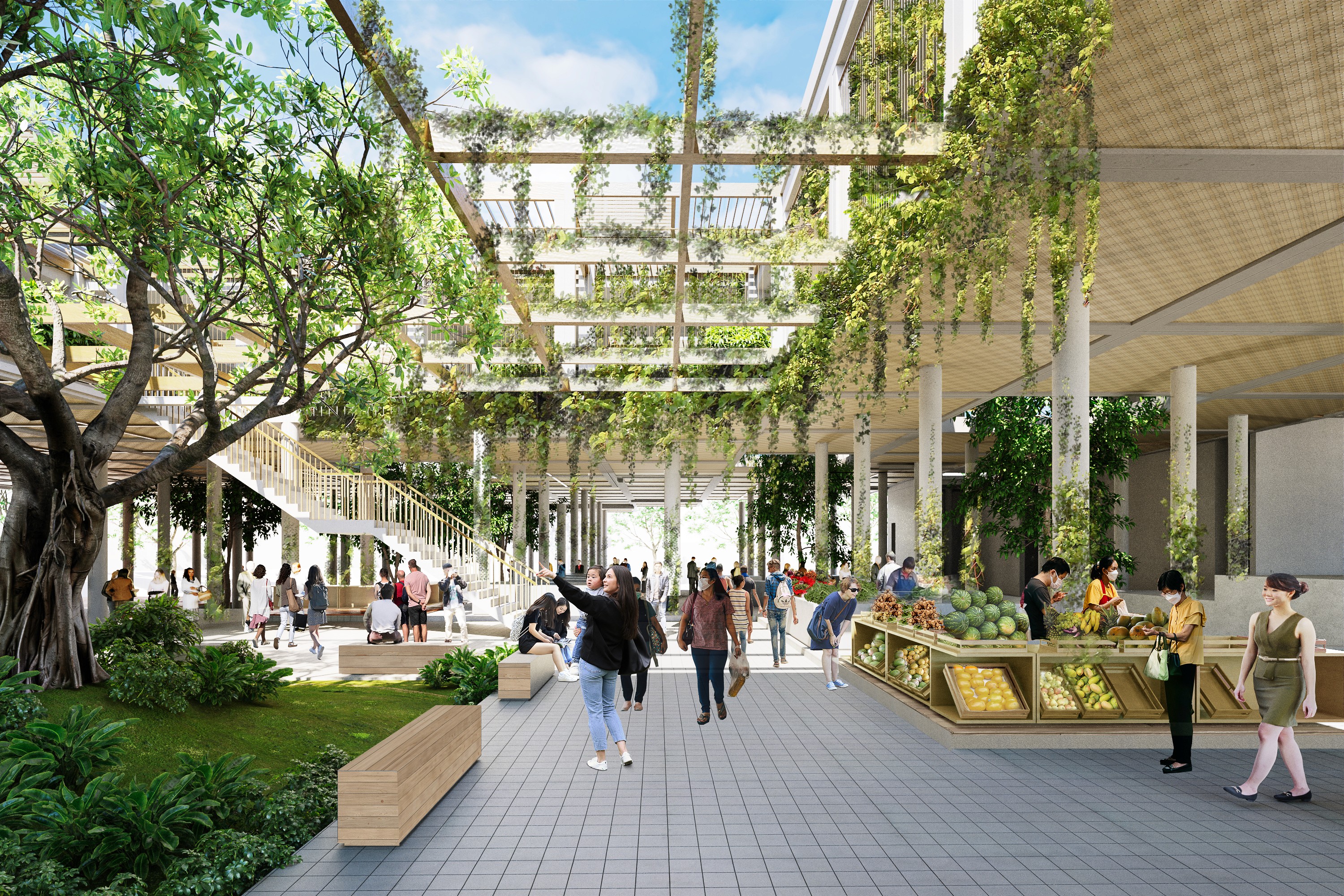
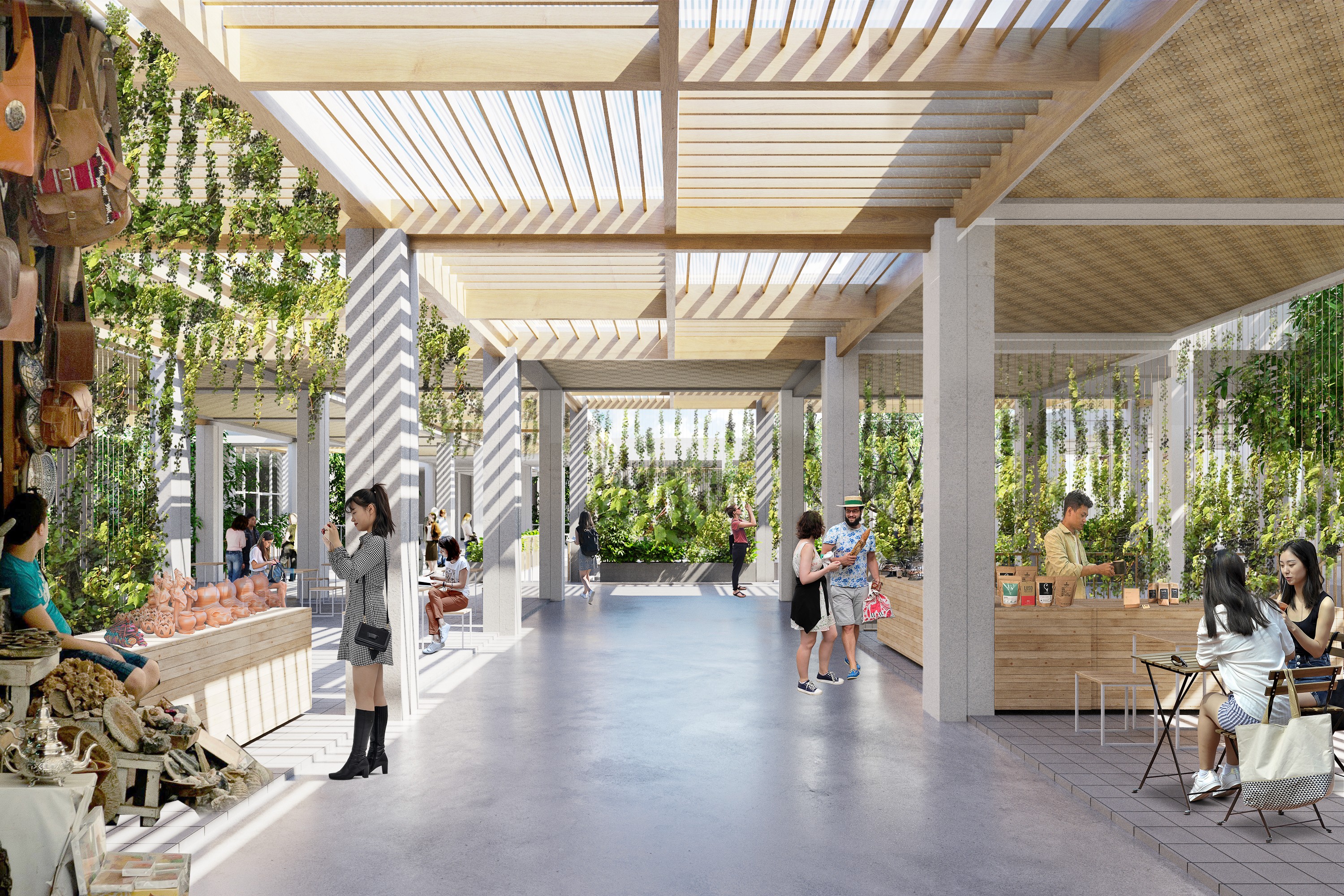
To further address environmental conditions, the architecture is elevated to minimize ground impact and facilitate airflow. Integrated planting and rooftop gardens serve as a thermal buffer to reduce heat gain and stabilize the microclimate. Material selection focuses on durability and compatibility with local construction methods, ensuring long-term usability and ease of upkeep.
By combining these technical and spatial strategies, the market provides a functional platform for vendors, farmers, and artisans. The final framework supports consistent daily activity while strengthening the resilience of local economic networks.
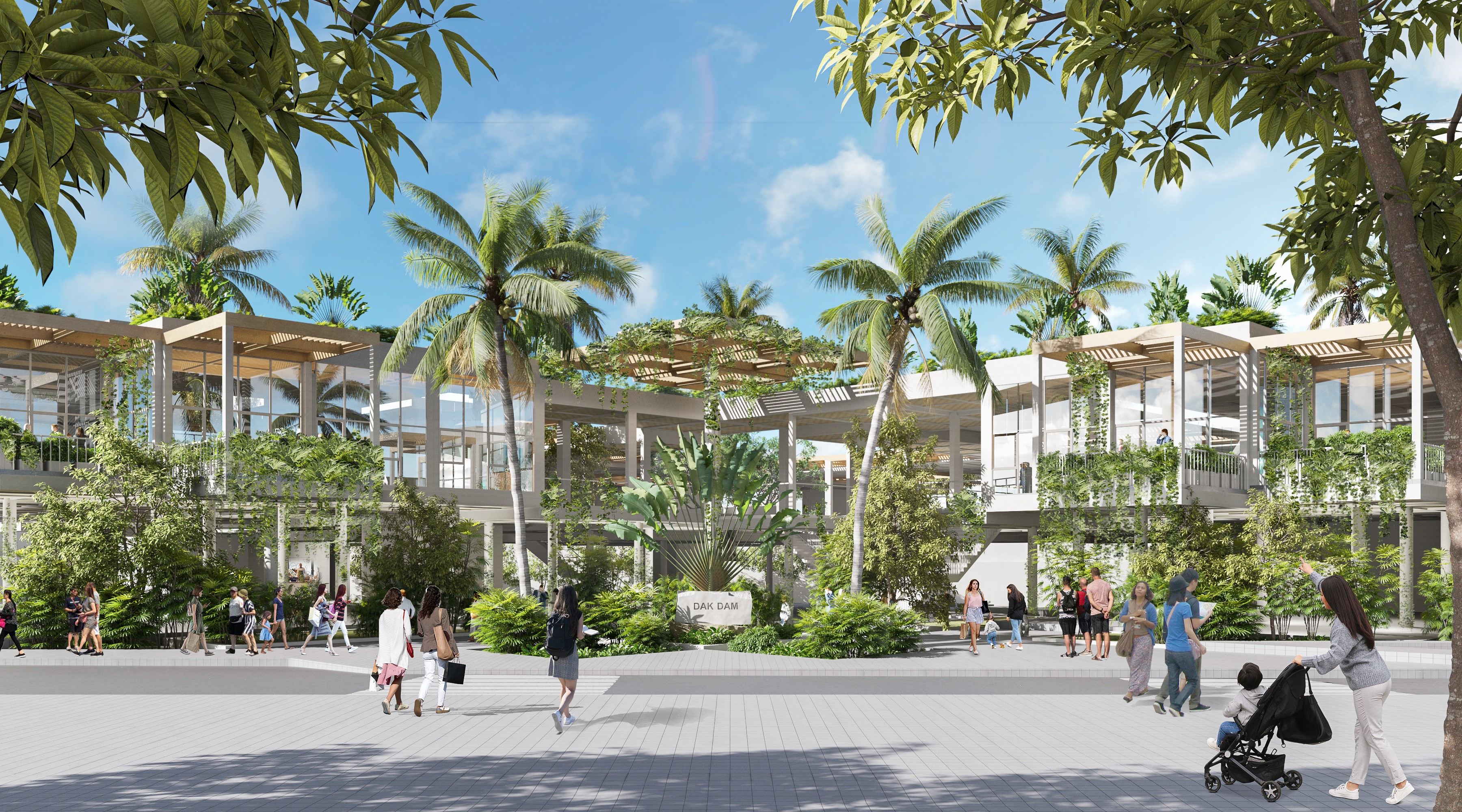
To further address environmental conditions, the architecture is elevated to minimize ground impact and facilitate airflow. Integrated planting and rooftop gardens serve as a thermal buffer to reduce heat gain and stabilize the microclimate. Material selection focuses on durability and compatibility with local construction methods, ensuring long-term usability and ease of upkeep.
By combining these technical and spatial strategies, the market provides a functional platform for vendors, farmers, and artisans. The final framework supports consistent daily activity while strengthening the resilience of local economic networks.