Cambodia’s Construction Industry: Is It Time for Stronger Regulation?
Cambodia’s Construction Industry: Is It Time for Stronger Regulation?

Cambodia’s next generation of assets is being defined by how effectively projects move from ambition to execution. Photo by Piseth Mao via Pexels.
The true quality of an asset is verified during its years of operation. Maintenance, material performance, and occupant experience determine whether early-stage design decisions deliver a predictable lifecycle cost and sustained revenue.
Construction regulation and lifecycle risk in Cambodia
Cambodia’s construction market is scaling in complexity, with taller buildings, denser sites, tighter programmes, higher MEP loads and more demanding end-users. In that environment, the gap between “built” and “built to operate reliably” becomes expensive. Material quality, applied technologies, and long-term maintenance strategies determine how quickly construction deficiencies surface in operation; in Cambodia’s tropical climate, issues such as water ingress, corrosion, and system inefficiency tend to emerge more quickly, accelerating lifecycle costs and shortening the window for economical corrective action.
Stronger regulation functions as market infrastructure when it creates a repeatable system where compliance is evidenced at clear project stages, verified on site, and recorded for handover and ongoing operation. This builds consistency through approvals, inspections, and testing that reduce rework, delays, and unplanned operating costs.
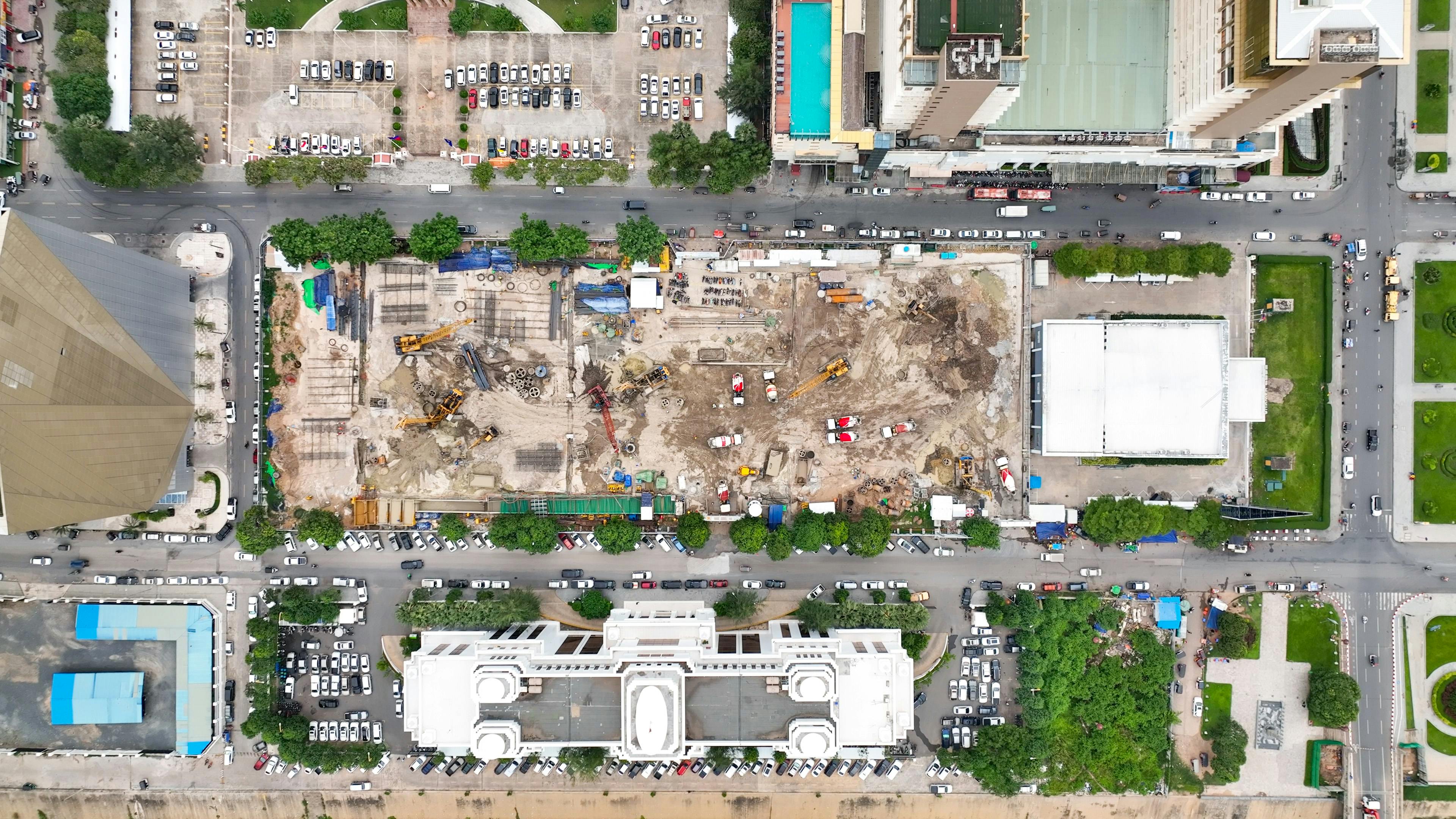
Large-scale urban development requires coordinated control across every layer of delivery. Photo by Thoeuk Davit via Pexels.
Why building standards affect operating costs
As projects increase in scale and technical interdependence, the downside of inconsistent standards becomes more costly. Systems are more connected, construction programmes are tighter, and the exposure after handover is higher.
Regulation translates design intent into verifiable outcomes through inspections and testing. Lower upfront cost decisions often return as higher operating costs through energy use, maintenance and early replacement cycles. Well‑planned maintenance and asset management reduce future operational expenses and directly improve return on investment. This makes compliance a business decision as much as a technical one.
What weak enforcement leads to after handover
When requirements are unclear, unevenly applied, or treated as box-ticking, risk shifts into operations, where fixes are hardest and most expensive. Underperformance becomes structural, driven by operational inefficiencies that reduce reliability and increase lifecycle cost. Key manifestations include:
Post-handover failures that trigger recurring repairs, disruption, and claim cycles
Site-driven decisions replacing coordinated intent, resulting in permanent issues that are difficult to reverse
Variations and substitutions that erode durability, safety margins, and maintainability
Approval volatility when compliance gaps surface late, driving redesign and programme extension
Problems commonly surface during early in‑use periods and compound thereafter, rather than being obvious at handover.
Common construction failures in Cambodia and where they show up
In Cambodia’s tropical climate, issues such as water infiltration, corrosion and façade deterioration tend to emerge quickly, accelerating maintenance demand and compounding lifecycle cost. Non-compliance often hides in coordination gaps and interfaces, and then becomes apparent through everyday failures.
Envelope waterproofing and façade interfaces
Small failures at balcony thresholds and window perimeters often become recurring leak points during Phnom Penh’s wet-season rains. Gaps in detailing and site control lead to water ingress, staining, and accelerated deterioration. Beyond repair costs, the impact is ongoing disruption and reduced tenant confidence.
HVAC ventilation and commissioning
During hot, high-humidity months, under-commissioned systems often struggle with moisture control. Condensation on diffusers or glazing and persistent comfort complaints are common, even when temperatures appear correct. These conditions affect productivity, dwell time, energy demand and workplace performance. The interaction between commissioning and material quality becomes evident early in operation: when either is deficient, shortfalls appear rapidly and reduce asset reliability and value.
Fire and life safety coordination
Fire strategy requires alignment across architecture, structure, and MEP. Late-stage layout changes can trigger rework of egress paths and penetrations, adding pressure to programme and approvals.
Acoustics and speech privacy
Open-plan environments often underdeliver in meeting rooms and leadership areas where speech privacy is expected. If partitions and ceiling interfaces are not resolved as a system, post-occupancy fixes are costly and limited in effectiveness.
Handover documentation and building records
Where building teams rely on ad-hoc fixes, incomplete as-built drawings and mismatched O&M manuals slow fault diagnosis, increase downtime and obscure responsibility. Accurate records are more than procedural requirements: they materially improve maintenance efficiency and support revenue stability by making fault resolution faster and less costly.
Supply chain and substitutions
A local constraint adds complexity. Import-dependent supply chains and shifting lead times can increase substitution pressure. Without a structured approval pathway and equivalency checks, substitutions can reduce durability while drawings still appear compliant.
Planning regulation vs construction regulation in Cambodia
The conversation often collapses into “construction quality”, but planning and construction are distinct levers that shape long-term value.
Planning regulation and development outcomes
Planning controls influence whether a project functions efficiently as part of the city. Access, servicing, and pedestrian flow affect operations, while orientation and massing influence heat gain and energy demand over time. Coordinated urban planning and controlled infrastructure development increase long‑term investment attractiveness, supporting rental demand and property value across entire districts.
Construction regulation and quality assurance
Construction standards reduce variability during delivery. Outcomes are demonstrated through inspections, testing, and recorded results. Drawings describe intent, not installed reality. This includes fire safety compliance, building services checks, and clear records that support maintenance across the asset lifecycle.
Construction accountability and oversight that works on site

Construction outcomes are determined by the discipline of design documentation. Photo by Robin Narciso.
Regulation only works when accountability is clear on site and traceable in records.
In practice, stronger oversight includes:
Defined responsibility across disciplines, including ownership of coordination decisions
A review cadence with sign-offs, issue tracking, and closure
Hold points for critical works, such as waterproofing and firestopping, before they are concealed
Commissioning planned early, with testing defined and documented, and clear records issued at handover
Early warning signs of higher lifecycle cost
These signals indicate that risk is being pushed into operations:
No defined commissioning scope, or reliance on late-stage testing alone
Weak site supervision or unclear QA procedures
Limited detail on waterproofing and key interfaces
Substitution flexibility without structured approval and equivalency checks
Unclear handover deliverables, especially as-built drawings and O&M quality
Why compliance records matter for international investors
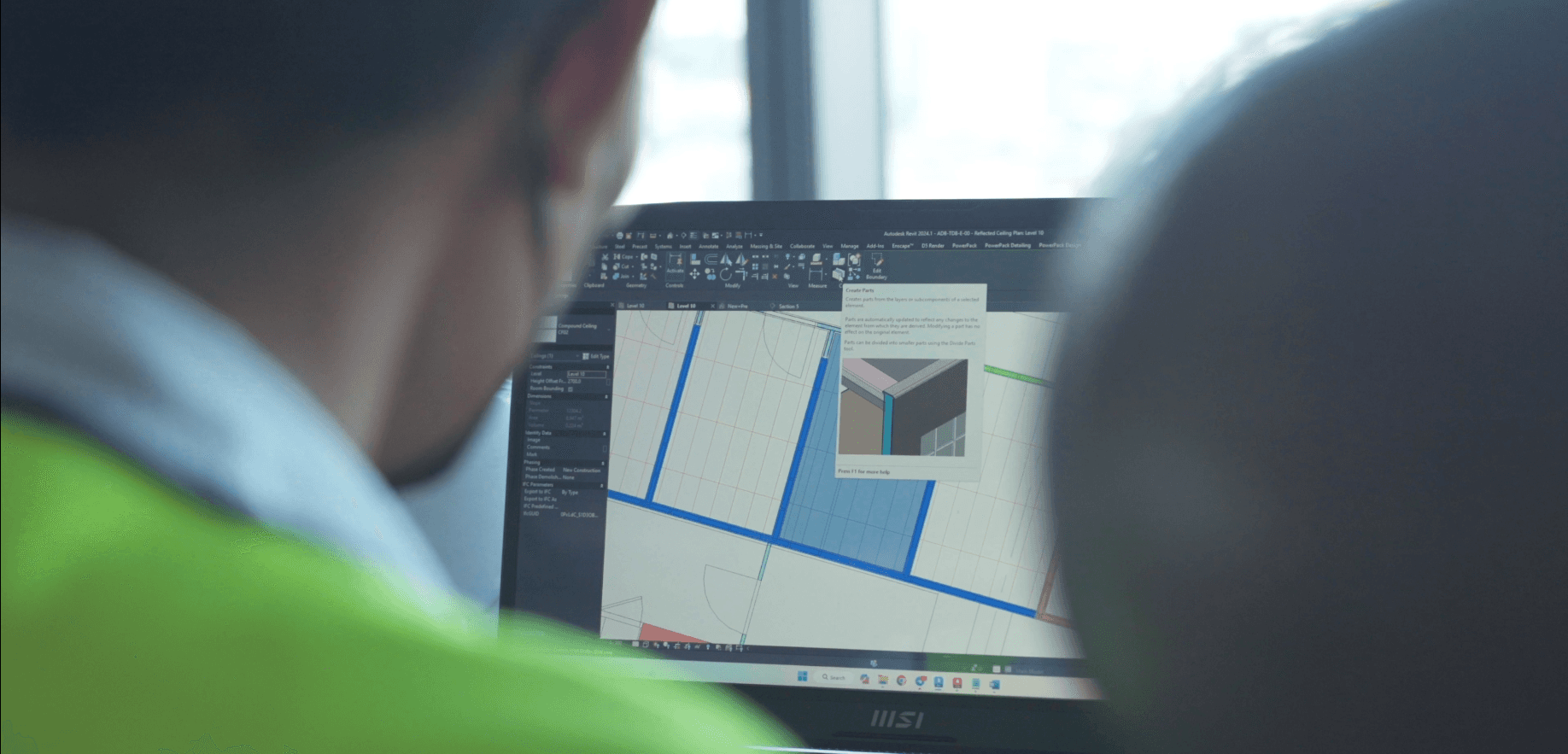
Coordinated data provides the transparency required for investor confidence. Photo by Robin Narciso.
International capital and operators evaluate predictability. Clear, traceable handover records turn claims into evidence, speeding due diligence, improving risk pricing and simplifying leasing discussions. Consistent performance also shapes tenant and end‑user experience.
Three non‑negotiables for reliable building performance
Require an early commissioning plan with defined tests, responsibilities and recorded results.
Set hold points for critical interfaces and require documented inspection evidence before works are concealed.
Define the handover evidence pack contractually and link final payment to its verified delivery.
Use the checklist below to define the scope, responsibilities and deliverables required to satisfy these non‑negotiables.
Construction QA checklist for developers and operators in Cambodia
Use this as a project brief and consultant appointment reference.
Standards and compliance tracking
Confirm applicable standards for climate and asset type, and record the chosen framework in the project programme.
Define how compliance will be tracked across design stages, specifying responsible parties for each record and sign-off.
Oversight and quality control
List hold points for waterproofing, façade interfaces, and firestopping with required inspection evidence for each.
Specify non-conformance reporting, issue tracking and closure procedures, naming the signatories for final acceptance.
Commissioning and verification
Provide an early commissioning scope that maps tests to systems, performance criteria and sign-off roles.
Where third‑party verification is required, specify the scope, documentation format and approving authority.
Maintainability and lifecycle risk
Confirm safe access and maintenance provisions for key systems and façade elements.
Record realistic replacement cycles for major materials and systems and include them in the asset maintenance plan.
Handover documentation checklist and minimum evidence pack
To support reliable operation, a project should be able to produce:
Compliance narrative and issue register with tracked resolutions.
Approved shop drawings with interface details aligned to as-installed conditions.
Inspection records and dated photo evidence for critical works.
Commissioning reports, test results and commissioning logbook entries.
Third-party inspection or testing reports, where applicable.
As-built drawings and clearly labelled systems diagrams.
O&M manuals matched to installed equipment with spare parts lists and specific maintenance schedules.
Defects register with clear responsibilities and close-out status.
FAQs
What is commissioning, and why does it matter?
Commissioning is the process of confirming that building systems operate as intended. It reduces post-handover failures by validating outcomes through testing and formal sign-off.
Why do records affect operational cost?
Operators depend on accurate records to diagnose and maintain systems. Poor records increase downtime and lead to repeated, inefficient fixes.
Why include planning regulation in this discussion?
Planning decisions determine how a project functions, from circulation to energy demand. Many long-term constraints are set before construction begins.
What handover documentation should be non-negotiable?
As-built drawings, complete O&M manuals, commissioning reports, and a defects close-out register. Without these, building operations become harder to manage and risk increases.
Delivering certainty across the asset lifecycle
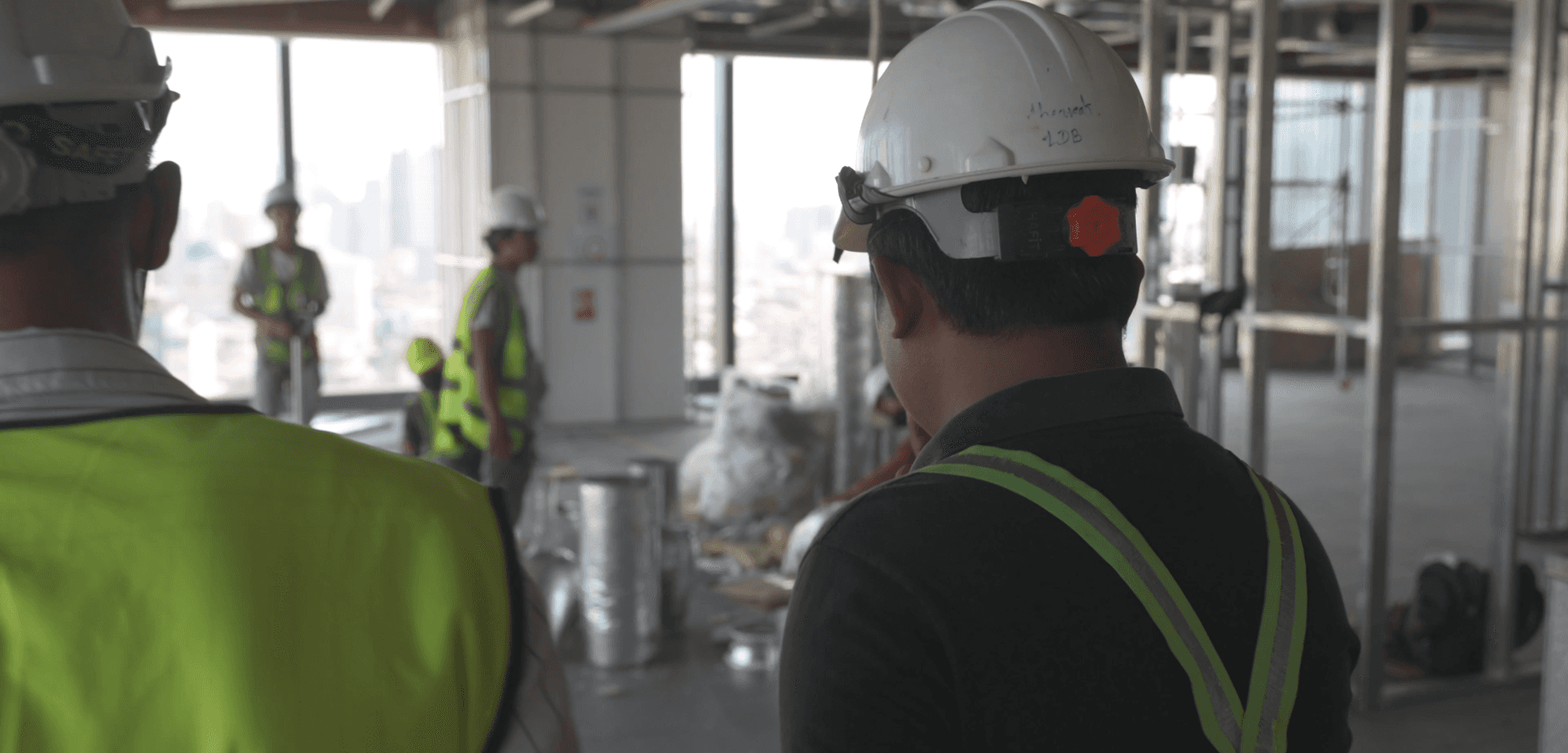
On-site execution, guided by clear standards and continuous oversight, is what ultimately secures asset value. Photo by Robin Narciso.
Stronger construction and planning regulation is not about slowing development. It creates consistency, safer buildings, lower lifecycle cost and assets that operate predictably after handover. As Cambodia’s built environment matures, competitiveness will increasingly depend on demonstrable maintainability, accountability and traceable evidence. The technical condition of a building also influences branding and market positioning: well‑coordinated, durable assets age more slowly, remain reliable and sustain tenant demand and market value.
If you are planning a project where operational reliability and lifecycle cost matter, The Room Architecture and Design can support your team with risk-led design coordination, documentation, and handover evidence standards. Contact us to review your project brief and delivery approach before decisions become expensive to reverse.
The true quality of an asset is verified during its years of operation. Maintenance, material performance, and occupant experience determine whether early-stage design decisions deliver a predictable lifecycle cost and sustained revenue.
Construction regulation and lifecycle risk in Cambodia
Cambodia’s construction market is scaling in complexity, with taller buildings, denser sites, tighter programmes, higher MEP loads and more demanding end-users. In that environment, the gap between “built” and “built to operate reliably” becomes expensive. Material quality, applied technologies, and long-term maintenance strategies determine how quickly construction deficiencies surface in operation; in Cambodia’s tropical climate, issues such as water ingress, corrosion, and system inefficiency tend to emerge more quickly, accelerating lifecycle costs and shortening the window for economical corrective action.
Stronger regulation functions as market infrastructure when it creates a repeatable system where compliance is evidenced at clear project stages, verified on site, and recorded for handover and ongoing operation. This builds consistency through approvals, inspections, and testing that reduce rework, delays, and unplanned operating costs.
Large-scale urban development requires coordinated control across every layer of delivery. Photo by Thoeuk Davit via Pexels.
Why building standards affect operating costs
As projects increase in scale and technical interdependence, the downside of inconsistent standards becomes more costly. Systems are more connected, construction programmes are tighter, and the exposure after handover is higher.
Regulation translates design intent into verifiable outcomes through inspections and testing. Lower upfront cost decisions often return as higher operating costs through energy use, maintenance and early replacement cycles. Well‑planned maintenance and asset management reduce future operational expenses and directly improve return on investment. This makes compliance a business decision as much as a technical one.
What weak enforcement leads to after handover
When requirements are unclear, unevenly applied, or treated as box-ticking, risk shifts into operations, where fixes are hardest and most expensive. Underperformance becomes structural, driven by operational inefficiencies that reduce reliability and increase lifecycle cost. Key manifestations include:
Post-handover failures that trigger recurring repairs, disruption, and claim cycles
Site-driven decisions replacing coordinated intent, resulting in permanent issues that are difficult to reverse
Variations and substitutions that erode durability, safety margins, and maintainability
Approval volatility when compliance gaps surface late, driving redesign and programme extension
Problems commonly surface during early in‑use periods and compound thereafter, rather than being obvious at handover.
Common construction failures in Cambodia and where they show up
In Cambodia’s tropical climate, issues such as water infiltration, corrosion and façade deterioration tend to emerge quickly, accelerating maintenance demand and compounding lifecycle cost. Non-compliance often hides in coordination gaps and interfaces, and then becomes apparent through everyday failures.
Envelope waterproofing and façade interfaces
Small failures at balcony thresholds and window perimeters often become recurring leak points during Phnom Penh’s wet-season rains. Gaps in detailing and site control lead to water ingress, staining, and accelerated deterioration. Beyond repair costs, the impact is ongoing disruption and reduced tenant confidence.
HVAC ventilation and commissioning
During hot, high-humidity months, under-commissioned systems often struggle with moisture control. Condensation on diffusers or glazing and persistent comfort complaints are common, even when temperatures appear correct. These conditions affect productivity, dwell time, energy demand and workplace performance. The interaction between commissioning and material quality becomes evident early in operation: when either is deficient, shortfalls appear rapidly and reduce asset reliability and value.
Fire and life safety coordination
Fire strategy requires alignment across architecture, structure, and MEP. Late-stage layout changes can trigger rework of egress paths and penetrations, adding pressure to programme and approvals.
Acoustics and speech privacy
Open-plan environments often underdeliver in meeting rooms and leadership areas where speech privacy is expected. If partitions and ceiling interfaces are not resolved as a system, post-occupancy fixes are costly and limited in effectiveness.
Handover documentation and building records
Where building teams rely on ad-hoc fixes, incomplete as-built drawings and mismatched O&M manuals slow fault diagnosis, increase downtime and obscure responsibility. Accurate records are more than procedural requirements: they materially improve maintenance efficiency and support revenue stability by making fault resolution faster and less costly.
Supply chain and substitutions
A local constraint adds complexity. Import-dependent supply chains and shifting lead times can increase substitution pressure. Without a structured approval pathway and equivalency checks, substitutions can reduce durability while drawings still appear compliant.
Planning regulation vs construction regulation in Cambodia
The conversation often collapses into “construction quality”, but planning and construction are distinct levers that shape long-term value.
Planning regulation and development outcomes
Planning controls influence whether a project functions efficiently as part of the city. Access, servicing, and pedestrian flow affect operations, while orientation and massing influence heat gain and energy demand over time. Coordinated urban planning and controlled infrastructure development increase long‑term investment attractiveness, supporting rental demand and property value across entire districts.
Construction regulation and quality assurance
Construction standards reduce variability during delivery. Outcomes are demonstrated through inspections, testing, and recorded results. Drawings describe intent, not installed reality. This includes fire safety compliance, building services checks, and clear records that support maintenance across the asset lifecycle.
Construction accountability and oversight that works on site
Construction outcomes are determined by the discipline of design documentation. Photo by Robin Narciso.
Regulation only works when accountability is clear on site and traceable in records.
In practice, stronger oversight includes:
Defined responsibility across disciplines, including ownership of coordination decisions
A review cadence with sign-offs, issue tracking, and closure
Hold points for critical works, such as waterproofing and firestopping, before they are concealed
Commissioning planned early, with testing defined and documented, and clear records issued at handover
Early warning signs of higher lifecycle cost
These signals indicate that risk is being pushed into operations:
No defined commissioning scope, or reliance on late-stage testing alone
Weak site supervision or unclear QA procedures
Limited detail on waterproofing and key interfaces
Substitution flexibility without structured approval and equivalency checks
Unclear handover deliverables, especially as-built drawings and O&M quality
Why compliance records matter for international investors
Coordinated data provides the transparency required for investor confidence. Photo by Robin Narciso.
International capital and operators evaluate predictability. Clear, traceable handover records turn claims into evidence, speeding due diligence, improving risk pricing and simplifying leasing discussions. Consistent performance also shapes tenant and end‑user experience.
Three non‑negotiables for reliable building performance
Require an early commissioning plan with defined tests, responsibilities and recorded results.
Set hold points for critical interfaces and require documented inspection evidence before works are concealed.
Define the handover evidence pack contractually and link final payment to its verified delivery.
Use the checklist below to define the scope, responsibilities and deliverables required to satisfy these non‑negotiables.
Construction QA checklist for developers and operators in Cambodia
Use this as a project brief and consultant appointment reference.
Standards and compliance tracking
Confirm applicable standards for climate and asset type, and record the chosen framework in the project programme.
Define how compliance will be tracked across design stages, specifying responsible parties for each record and sign-off.
Oversight and quality control
List hold points for waterproofing, façade interfaces, and firestopping with required inspection evidence for each.
Specify non-conformance reporting, issue tracking and closure procedures, naming the signatories for final acceptance.
Commissioning and verification
Provide an early commissioning scope that maps tests to systems, performance criteria and sign-off roles.
Where third‑party verification is required, specify the scope, documentation format and approving authority.
Maintainability and lifecycle risk
Confirm safe access and maintenance provisions for key systems and façade elements.
Record realistic replacement cycles for major materials and systems and include them in the asset maintenance plan.
Handover documentation checklist and minimum evidence pack
To support reliable operation, a project should be able to produce:
Compliance narrative and issue register with tracked resolutions.
Approved shop drawings with interface details aligned to as-installed conditions.
Inspection records and dated photo evidence for critical works.
Commissioning reports, test results and commissioning logbook entries.
Third-party inspection or testing reports, where applicable.
As-built drawings and clearly labelled systems diagrams.
O&M manuals matched to installed equipment with spare parts lists and specific maintenance schedules.
Defects register with clear responsibilities and close-out status.
FAQs
What is commissioning, and why does it matter?
Commissioning is the process of confirming that building systems operate as intended. It reduces post-handover failures by validating outcomes through testing and formal sign-off.
Why do records affect operational cost?
Operators depend on accurate records to diagnose and maintain systems. Poor records increase downtime and lead to repeated, inefficient fixes.
Why include planning regulation in this discussion?
Planning decisions determine how a project functions, from circulation to energy demand. Many long-term constraints are set before construction begins.
What handover documentation should be non-negotiable?
As-built drawings, complete O&M manuals, commissioning reports, and a defects close-out register. Without these, building operations become harder to manage and risk increases.
Delivering certainty across the asset lifecycle
On-site execution, guided by clear standards and continuous oversight, is what ultimately secures asset value. Photo by Robin Narciso.
Stronger construction and planning regulation is not about slowing development. It creates consistency, safer buildings, lower lifecycle cost and assets that operate predictably after handover. As Cambodia’s built environment matures, competitiveness will increasingly depend on demonstrable maintainability, accountability and traceable evidence. The technical condition of a building also influences branding and market positioning: well‑coordinated, durable assets age more slowly, remain reliable and sustain tenant demand and market value.
If you are planning a project where operational reliability and lifecycle cost matter, The Room Architecture and Design can support your team with risk-led design coordination, documentation, and handover evidence standards. Contact us to review your project brief and delivery approach before decisions become expensive to reverse.
The true quality of an asset is verified during its years of operation. Maintenance, material performance, and occupant experience determine whether early-stage design decisions deliver a predictable lifecycle cost and sustained revenue.
Construction regulation and lifecycle risk in Cambodia
Cambodia’s construction market is scaling in complexity, with taller buildings, denser sites, tighter programmes, higher MEP loads and more demanding end-users. In that environment, the gap between “built” and “built to operate reliably” becomes expensive. Material quality, applied technologies, and long-term maintenance strategies determine how quickly construction deficiencies surface in operation; in Cambodia’s tropical climate, issues such as water ingress, corrosion, and system inefficiency tend to emerge more quickly, accelerating lifecycle costs and shortening the window for economical corrective action.
Stronger regulation functions as market infrastructure when it creates a repeatable system where compliance is evidenced at clear project stages, verified on site, and recorded for handover and ongoing operation. This builds consistency through approvals, inspections, and testing that reduce rework, delays, and unplanned operating costs.
Large-scale urban development requires coordinated control across every layer of delivery. Photo by Thoeuk Davit via Pexels.
Why building standards affect operating costs
As projects increase in scale and technical interdependence, the downside of inconsistent standards becomes more costly. Systems are more connected, construction programmes are tighter, and the exposure after handover is higher.
Regulation translates design intent into verifiable outcomes through inspections and testing. Lower upfront cost decisions often return as higher operating costs through energy use, maintenance and early replacement cycles. Well‑planned maintenance and asset management reduce future operational expenses and directly improve return on investment. This makes compliance a business decision as much as a technical one.
What weak enforcement leads to after handover
When requirements are unclear, unevenly applied, or treated as box-ticking, risk shifts into operations, where fixes are hardest and most expensive. Underperformance becomes structural, driven by operational inefficiencies that reduce reliability and increase lifecycle cost. Key manifestations include:
Post-handover failures that trigger recurring repairs, disruption, and claim cycles
Site-driven decisions replacing coordinated intent, resulting in permanent issues that are difficult to reverse
Variations and substitutions that erode durability, safety margins, and maintainability
Approval volatility when compliance gaps surface late, driving redesign and programme extension
Problems commonly surface during early in‑use periods and compound thereafter, rather than being obvious at handover.
Common construction failures in Cambodia and where they show up
In Cambodia’s tropical climate, issues such as water infiltration, corrosion and façade deterioration tend to emerge quickly, accelerating maintenance demand and compounding lifecycle cost. Non-compliance often hides in coordination gaps and interfaces, and then becomes apparent through everyday failures.
Envelope waterproofing and façade interfaces
Small failures at balcony thresholds and window perimeters often become recurring leak points during Phnom Penh’s wet-season rains. Gaps in detailing and site control lead to water ingress, staining, and accelerated deterioration. Beyond repair costs, the impact is ongoing disruption and reduced tenant confidence.
HVAC ventilation and commissioning
During hot, high-humidity months, under-commissioned systems often struggle with moisture control. Condensation on diffusers or glazing and persistent comfort complaints are common, even when temperatures appear correct. These conditions affect productivity, dwell time, energy demand and workplace performance. The interaction between commissioning and material quality becomes evident early in operation: when either is deficient, shortfalls appear rapidly and reduce asset reliability and value.
Fire and life safety coordination
Fire strategy requires alignment across architecture, structure, and MEP. Late-stage layout changes can trigger rework of egress paths and penetrations, adding pressure to programme and approvals.
Acoustics and speech privacy
Open-plan environments often underdeliver in meeting rooms and leadership areas where speech privacy is expected. If partitions and ceiling interfaces are not resolved as a system, post-occupancy fixes are costly and limited in effectiveness.
Handover documentation and building records
Where building teams rely on ad-hoc fixes, incomplete as-built drawings and mismatched O&M manuals slow fault diagnosis, increase downtime and obscure responsibility. Accurate records are more than procedural requirements: they materially improve maintenance efficiency and support revenue stability by making fault resolution faster and less costly.
Supply chain and substitutions
A local constraint adds complexity. Import-dependent supply chains and shifting lead times can increase substitution pressure. Without a structured approval pathway and equivalency checks, substitutions can reduce durability while drawings still appear compliant.
Planning regulation vs construction regulation in Cambodia
The conversation often collapses into “construction quality”, but planning and construction are distinct levers that shape long-term value.
Planning regulation and development outcomes
Planning controls influence whether a project functions efficiently as part of the city. Access, servicing, and pedestrian flow affect operations, while orientation and massing influence heat gain and energy demand over time. Coordinated urban planning and controlled infrastructure development increase long‑term investment attractiveness, supporting rental demand and property value across entire districts.
Construction regulation and quality assurance
Construction standards reduce variability during delivery. Outcomes are demonstrated through inspections, testing, and recorded results. Drawings describe intent, not installed reality. This includes fire safety compliance, building services checks, and clear records that support maintenance across the asset lifecycle.
Construction accountability and oversight that works on site
Construction outcomes are determined by the discipline of design documentation. Photo by Robin Narciso.
Regulation only works when accountability is clear on site and traceable in records.
In practice, stronger oversight includes:
Defined responsibility across disciplines, including ownership of coordination decisions
A review cadence with sign-offs, issue tracking, and closure
Hold points for critical works, such as waterproofing and firestopping, before they are concealed
Commissioning planned early, with testing defined and documented, and clear records issued at handover
Early warning signs of higher lifecycle cost
These signals indicate that risk is being pushed into operations:
No defined commissioning scope, or reliance on late-stage testing alone
Weak site supervision or unclear QA procedures
Limited detail on waterproofing and key interfaces
Substitution flexibility without structured approval and equivalency checks
Unclear handover deliverables, especially as-built drawings and O&M quality
Why compliance records matter for international investors
Coordinated data provides the transparency required for investor confidence. Photo by Robin Narciso.
International capital and operators evaluate predictability. Clear, traceable handover records turn claims into evidence, speeding due diligence, improving risk pricing and simplifying leasing discussions. Consistent performance also shapes tenant and end‑user experience.
Three non‑negotiables for reliable building performance
Require an early commissioning plan with defined tests, responsibilities and recorded results.
Set hold points for critical interfaces and require documented inspection evidence before works are concealed.
Define the handover evidence pack contractually and link final payment to its verified delivery.
Use the checklist below to define the scope, responsibilities and deliverables required to satisfy these non‑negotiables.
Construction QA checklist for developers and operators in Cambodia
Use this as a project brief and consultant appointment reference.
Standards and compliance tracking
Confirm applicable standards for climate and asset type, and record the chosen framework in the project programme.
Define how compliance will be tracked across design stages, specifying responsible parties for each record and sign-off.
Oversight and quality control
List hold points for waterproofing, façade interfaces, and firestopping with required inspection evidence for each.
Specify non-conformance reporting, issue tracking and closure procedures, naming the signatories for final acceptance.
Commissioning and verification
Provide an early commissioning scope that maps tests to systems, performance criteria and sign-off roles.
Where third‑party verification is required, specify the scope, documentation format and approving authority.
Maintainability and lifecycle risk
Confirm safe access and maintenance provisions for key systems and façade elements.
Record realistic replacement cycles for major materials and systems and include them in the asset maintenance plan.
Handover documentation checklist and minimum evidence pack
To support reliable operation, a project should be able to produce:
Compliance narrative and issue register with tracked resolutions.
Approved shop drawings with interface details aligned to as-installed conditions.
Inspection records and dated photo evidence for critical works.
Commissioning reports, test results and commissioning logbook entries.
Third-party inspection or testing reports, where applicable.
As-built drawings and clearly labelled systems diagrams.
O&M manuals matched to installed equipment with spare parts lists and specific maintenance schedules.
Defects register with clear responsibilities and close-out status.
FAQs
What is commissioning, and why does it matter?
Commissioning is the process of confirming that building systems operate as intended. It reduces post-handover failures by validating outcomes through testing and formal sign-off.
Why do records affect operational cost?
Operators depend on accurate records to diagnose and maintain systems. Poor records increase downtime and lead to repeated, inefficient fixes.
Why include planning regulation in this discussion?
Planning decisions determine how a project functions, from circulation to energy demand. Many long-term constraints are set before construction begins.
What handover documentation should be non-negotiable?
As-built drawings, complete O&M manuals, commissioning reports, and a defects close-out register. Without these, building operations become harder to manage and risk increases.
Delivering certainty across the asset lifecycle
On-site execution, guided by clear standards and continuous oversight, is what ultimately secures asset value. Photo by Robin Narciso.
Stronger construction and planning regulation is not about slowing development. It creates consistency, safer buildings, lower lifecycle cost and assets that operate predictably after handover. As Cambodia’s built environment matures, competitiveness will increasingly depend on demonstrable maintainability, accountability and traceable evidence. The technical condition of a building also influences branding and market positioning: well‑coordinated, durable assets age more slowly, remain reliable and sustain tenant demand and market value.
If you are planning a project where operational reliability and lifecycle cost matter, The Room Architecture and Design can support your team with risk-led design coordination, documentation, and handover evidence standards. Contact us to review your project brief and delivery approach before decisions become expensive to reverse.